Chips & Hardware
Zoox updates robotaxi design ahead of commercial launch
Amazon-owned Zoox has upgraded its robotaxi design for comfort and function, as the company hopes to launch commercial service later this year pending regulatory approval.
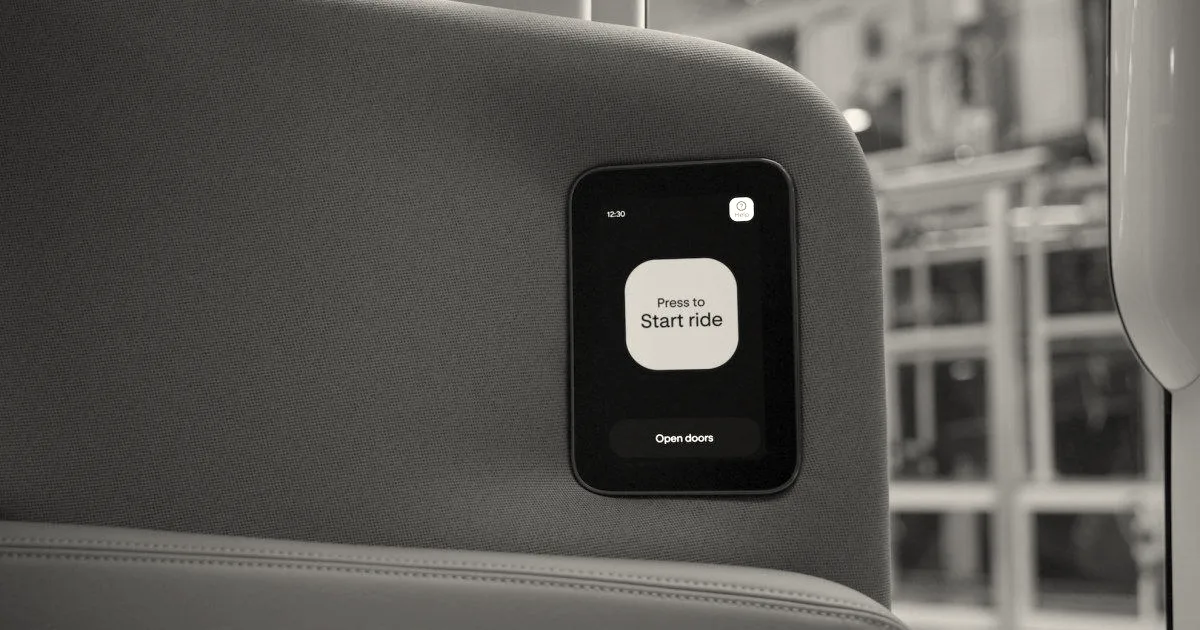
On Wednesday, Zoox revealed a series of upgrades to its purpose-built robotaxi, focusing on rider comfort and communication. The Amazon-owned company is implementing these changes based on rider feedback as it prepares for what it hopes will be a commercial launch later this year. While the core features of the electric, autonomous vehicle remain the same—including its bidirectional driving capability, four-wheel steering, and a maximum speed of up to 75 miles per hour—the design updates are intended to prepare the vehicle for carrying thousands of passengers.
The updated vehicle retains its core sensor suite of 40 cameras, radars, lidars, and infrared sensors. However, the interior now features more padding and ergonomic curves on the seats and headrests, alongside a lighter color palette of aloe-green seating and stone-grey flooring. According to the company, the lighter color palette creates a calmer environment and provides a contrasting backdrop that makes it easier to spot common objects like smartphones. Other interior adjustments include fluting on the charging pad to keep phones in place, larger cupholders, and a more visible touchscreen. On the exterior, Zoox relocated its bidirectional reflectors and added a new speaker and microphone to the door interface for two-way audio. According to Chris Stoffel, director of robot industrial design and studio engineering at Zoox, “The updates we’ve made to this iteration of our purpose-built robotaxi continue to further distinguish the Zoox experience from anything else available today.”
These design refinements also prepare the company for volume manufacturing. Zoox expects to one day build 10,000 robotaxis per year at its production facility in Hayward, California. The company states that its production capacity at the Hayward facility can reach up to 100 vehicles a week.
Before Zoox can launch volume production or begin paid commercial operations, it must clear a major regulatory hurdle. The company is currently awaiting a decision from the National Highway Traffic Safety Administration (NHTSA), the US federal road safety regulator, regarding a commercial exemption. This exemption is required because the vehicle lacks standard controls mandated by federal law, such as a steering wheel. The NHTSA previously granted Zoox an exemption in August 2025 to demonstrate its custom-built robotaxis on public roads. While awaiting the commercial decision, the company continues to test its vehicles and offer free rides in Austin, Texas; San Francisco; Las Vegas; and Miami, Florida.
Why it matters
Zoox is refining its vehicle design to improve passenger experience and prepare for volume manufacturing, a critical step as it awaits regulatory clearance to operate its steering-wheel-less robotaxis commercially.