Startups & Funding
World Labs secures $200M from Autodesk in $1B funding round
World Labs secured a $200 million investment from Autodesk as part of a $1 billion funding round to integrate world models into 3D design workflows.
World Labs, an AI startup founded by Fei-Fei Li, has secured a $200 million investment from Autodesk. The investment is part of a larger $1 billion funding round that includes investors such as AMD, Emerson Collective, Fidelity, and Nvidia. World Labs, which emerged from stealth in 2024 with $230 million in previous funding at a $1 billion valuation, declined to state whether this latest round increased its valuation. However, reports suggested the startup was aiming to raise at a $5 billion valuation.
The partnership will see Autodesk serve as an adviser to World Labs, with the two companies collaborating at the research and model level. They plan to explore how World Labs’ world models—which are AI systems that can generate and reason about immersive 3D environments—can work alongside Autodesk’s tools. Autodesk is a developer of 3D CAD, which is Computer-Aided Design software used for engineering and architecture. Daron Green, Autodesk’s chief scientist, clarified that data sharing is not part of the agreement. Green noted that the collaboration is in its early stages, meaning the precise form it will take is not yet determined. However, he suggested that the companies could anticipate consuming each other’s models in different settings. For example, users might start with a world-model-based sketch in World Labs and then use Autodesk’s technology to refine specific design details, or take an object designed in Autodesk’s platform and place it into a context created through a World Labs prompt.
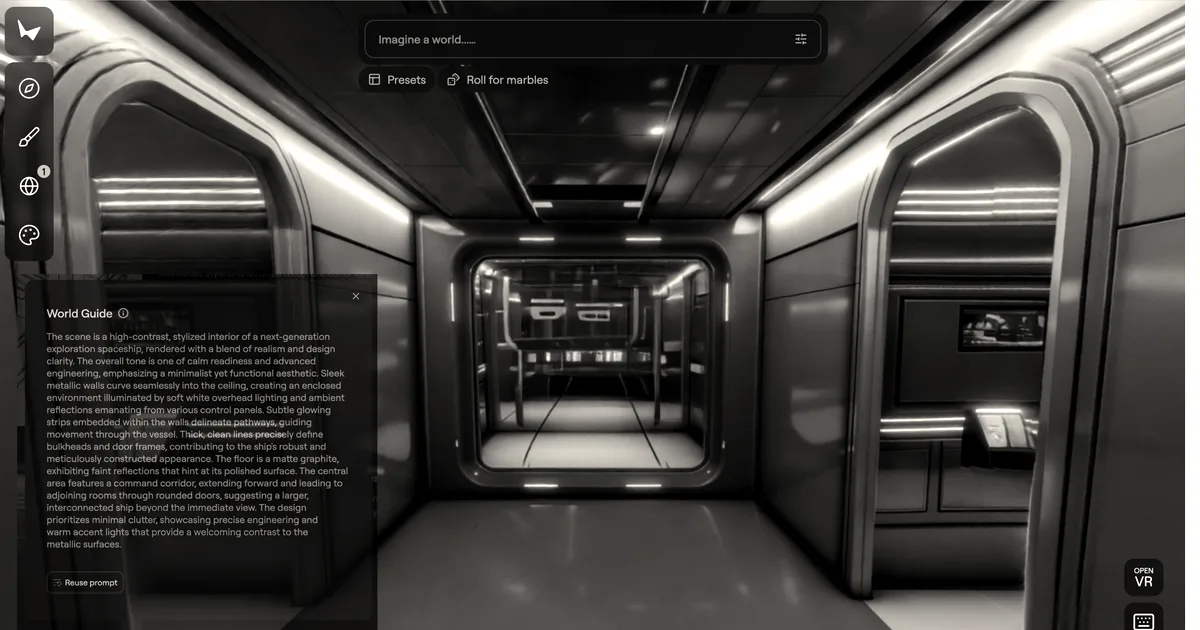
The companies plan to focus their initial efforts on media and entertainment use cases. This follows the release of World Labs’ first world model product, Marble, last November, which allows users to create editable, downloadable 3D environments. Autodesk has already been training models for character animation, which Green described as being close to world models because they respond to physical constraints like time and terrain. Fei-Fei Li emphasized the importance of developing physical AI that understands geometry, physics, and dynamics rather than just text. She noted that reconciling the semantic, spatial, and physical is the next great frontier of AI. “If AI is to be truly useful, it must understand worlds, not just words,” said Li, founder of World Labs.
Why it matters
Autodesk’s investment validates the commercial potential of World Labs’ technology, signaling a strategic shift toward integrating generative world models into professional Computer-Aided Design software used for engineering and architecture.