Apps & Consumer
WhatsApp adds incognito mode to Meta AI chats
WhatsApp is introducing an incognito mode for its Meta AI chatbot, allowing users to have ephemeral, non-saved conversations processed in a secure environment.
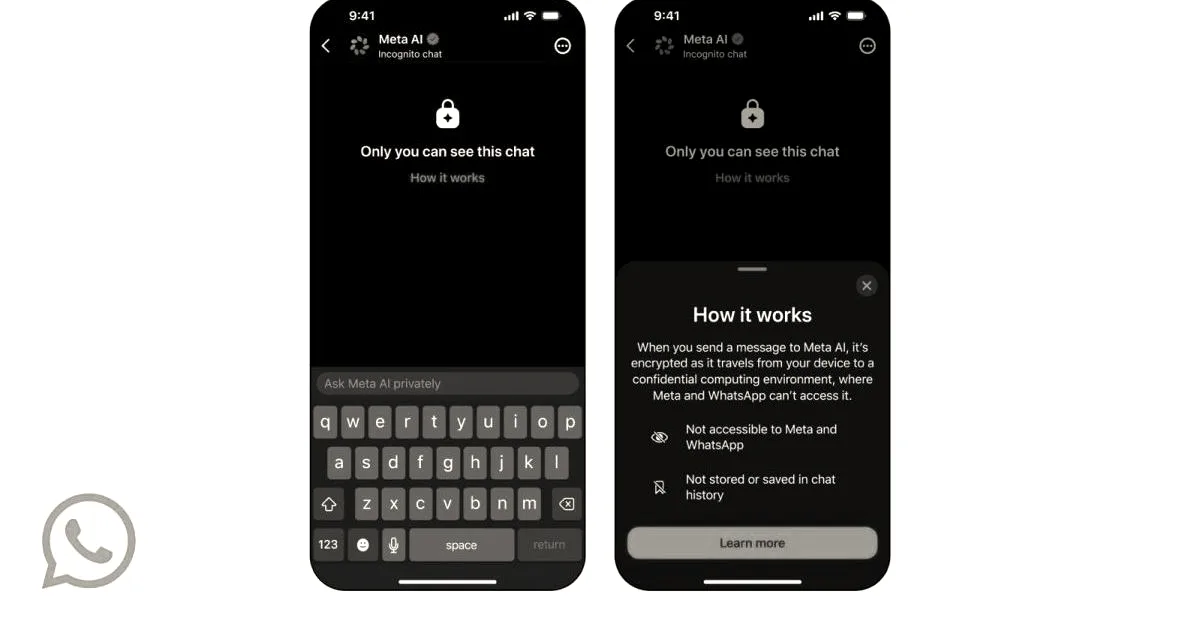
On Wednesday, Meta announced it is adding the ability to start “incognito” conversations with its Meta AI chatbot within WhatsApp. According to Meta, these conversations will be processed in a secure environment and cannot be seen by anyone. The incognito conversations are not saved, and messages will disappear by default once a user closes the chat. The session also ends if the user closes the app or locks their phone, causing Meta AI to lose the context of that specific conversation. The feature is scheduled to roll out to WhatsApp and the standalone Meta AI app over the next few months.
The new incognito chat uses the Muse Spark model, which was released last month. The integration builds on the private processing infrastructure that Meta detailed last year—an architecture designed to allow AI features to run without breaking end-to-end encryption. WhatsApp VP of Product Alice Newton-Rex stated that the company previously used smaller models for its AI features, but is now deploying Muse Spark for these ephemeral sessions. Newton-Rex explained the rationale behind the update: “People are starting to use AI for everything, including some of their most private thoughts, whether that’s tackling financial or health questions, or for advice on how to respond to a tricky message from a friend or a colleague. We think it’s really important to give people the ability to ask these questions as privately as possible.”
Meta is also working on an upcoming feature called Side Chat, which will tap into this same private processing infrastructure. Side Chat will allow users to invoke Meta AI within existing chats to ask questions and receive answers privately, without notifying or showing the interaction to other participants in the chat. Currently, users must tag the AI assistant in a group chat, making both the query and the response visible to everyone, or manually copy and paste text into a separate, private chat window.
The push for ephemeral AI interactions comes amid heightened scrutiny over data privacy. Last month, Reuters cited lawyers who warned that users’ conversations with an AI chatbot could be used against them in litigation. While competitors like ChatGPT and Claude already offer incognito modes, and privacy-focused companies like DuckDuckGo and Proton have launched their own privacy-first chatbots, Meta’s update represents an attempt to bring these protections directly into the widely used messaging ecosystem.
Why it matters
Meta is prioritizing privacy-focused AI features to address user concerns about data security, ensuring that sensitive queries—like financial or health advice—remain ephemeral and isolated from the company’s broader data storage.