Startups & Funding
Waabi raises $1 billion to expand into robotaxis with Uber
Waabi has raised $1 billion and partnered with Uber to deploy 25,000 or more robotaxis, marking the startup's first expansion beyond autonomous trucking.
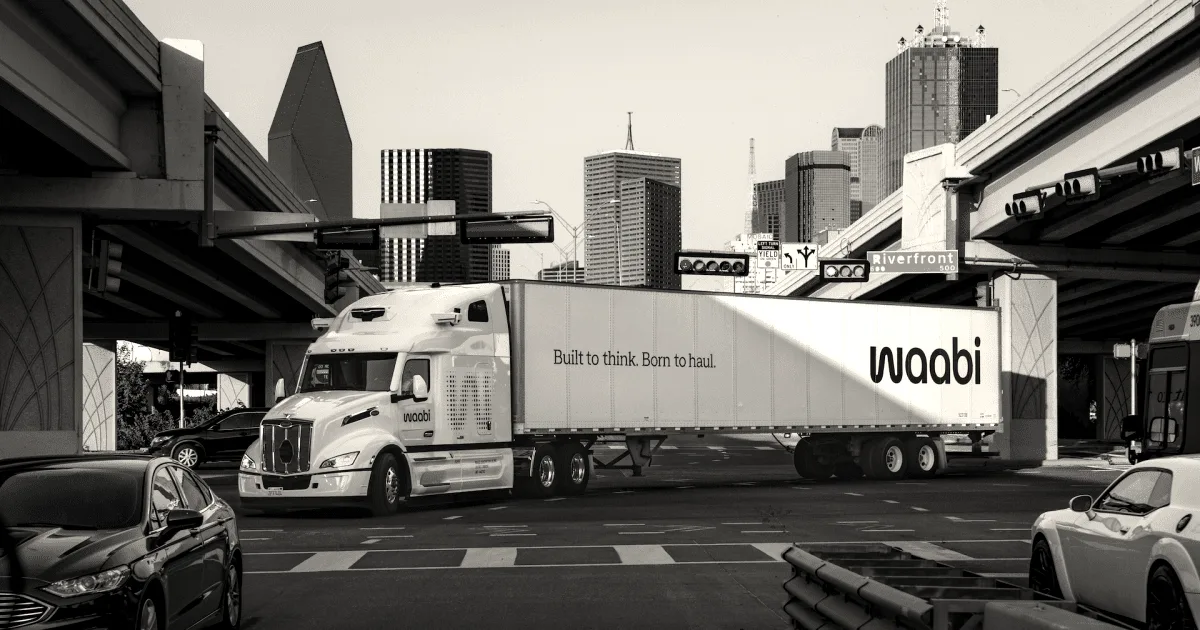
Autonomous vehicle startup Waabi has raised $1 billion in funding and partnered with Uber to deploy self-driving cars on the ride-hailing platform. The deal marks the company’s first expansion beyond autonomous trucking.
The funding consists of:
- An oversubscribed $750 million Series C (a late-stage venture capital round) co-led by Khosla Ventures and G2 Venture Partners.
- Roughly $250 million in milestone-based capital from Uber.
The capital will support the deployment of 25,000 or more Waabi Driver-powered robotaxis exclusively on Uber’s platform globally. The companies did not provide a timeline for the large-scale deployment. Other investors in the Series C round include NVentures, Porsche Automobil Holding SE, BlackRock, and BDC Capital’s Thrive Venture Fund.
The partnership represents a bet that Waabi’s single-stack artificial intelligence architecture can scale across multiple self-driving verticals. While competitors like Waymo, Nuro, Avride, Wayve, WeRide, and Momenta also deploy self-driving vehicles on Uber’s platform, Waabi founder and CEO Raquel Urtasun argues that her company’s capital-efficient approach and generalizable AI architecture provide a unique advantage to tackle both robotaxi and trucking markets simultaneously.
“We don’t need the gazillion humans to develop the technology and the large fleets that AV 1.0 needs,” Urtasun said. The Waabi Driver is trained and validated using Waabi World, a closed-loop simulator that builds digital twins of the physical world to teach the system to learn from mistakes without human intervention.
The deal brings Waabi’s total funding raised to roughly $1.28 billion, following a $200 million Series B round in June 2024. By comparison, competitors Aurora Innovation and Kodiak Robotics have raised $3.46 billion and $448 million to date, respectively. In the five years since its launch, Waabi has run commercial pilots in Texas. However, the rollout of a fully driverless truck on public highways has been delayed until sometime in the next few quarters, according to Urtasun. Waabi is also working with Volvo to build purpose-built autonomous trucks, which were revealed last October. Urtasun noted that Waabi plans to vertically integrate its technology with a fully redundant platform from the OEM (Original Equipment Manufacturer) to build safe and scalable technology.
Why it matters
The deal marks Waabi’s first expansion beyond autonomous trucking and represents a bet that its AI technology can scale across multiple self-driving verticals with a single technology stack.