Apps & Consumer
Uber launches division to manage autonomous vehicle operations
Uber has launched a new division, Uber Autonomous Solutions, to manage operations for its nearly two dozen autonomous vehicle partners.
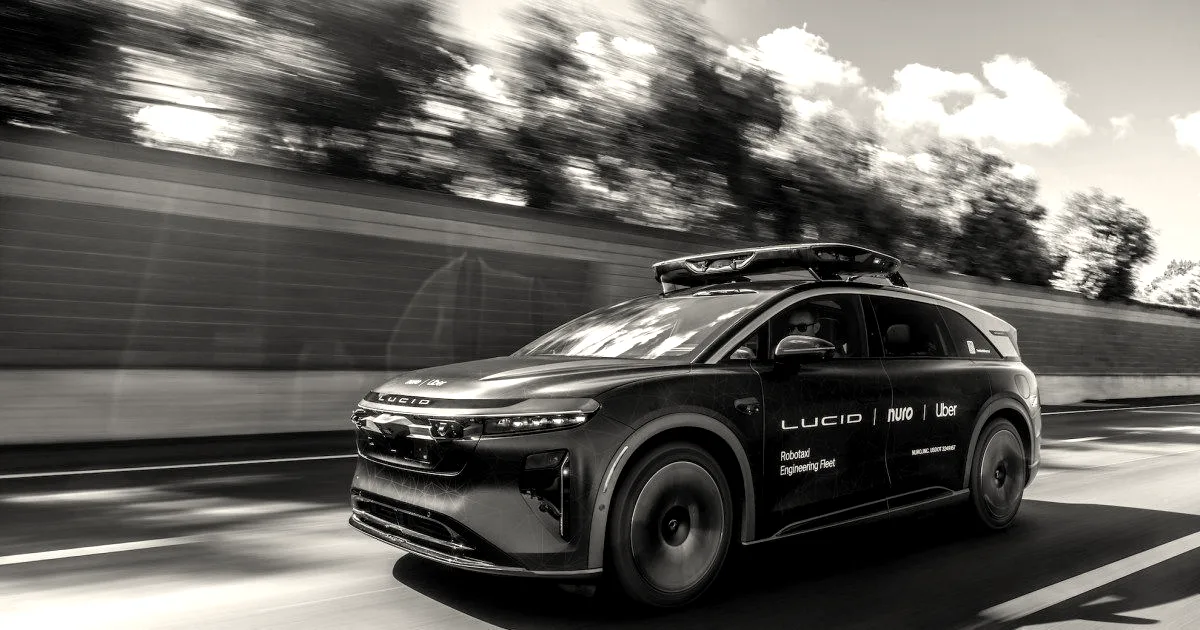
On Monday, Uber announced the launch of a new division called Uber Autonomous Solutions to manage operations for autonomous vehicle companies. The move formalizes the company’s role as an infrastructure and support provider for the sector.
Uber has amassed partnerships with nearly two dozen autonomous vehicle technology companies, including Lucid, Nuro, and WeRide, and has backed firms such as Waabi. To support these partners, Uber has invested $100 million to build fast-charging, autonomous-vehicle charging stations. The new division aims to provide operational depth, handling fleet management, customer support, and remote assistance—defined as human intervention or support for autonomous vehicles from a distance. Sarfraz Maredia, Uber’s global head of autonomous mobility and delivery, noted that the division intends to offer operational support where partners require it, allowing technical teams to focus on software development.
Under the new initiative, Uber plans to help its partners scale robotaxi—an autonomous vehicle used for ride-hailing—deployments to more than 15 cities by the end of this year. This expansion includes a plan to launch a robotaxi service with Volkswagen in Los Angeles by the end of 2026, though the service will not be driverless until 2027. “What’s going to determine the success or failure of autonomous in the world is whether it can be commercialized, and Uber is going to be the thing that makes autonomy commercially viable,” said Andrew Macdonald, Uber President and COO.
The shift follows Uber’s decision in 2020 to sell its former in-house autonomous vehicle development unit, Uber ATG, to Aurora. That sale came after years of internal struggles and a period during which one of its test vehicles killed a pedestrian. Since then, Uber has built a network of partnerships, including agreements with Waymo in Atlanta and Austin, China-based firms Baidu, Momenta, and Pony.ai, and U.K.-based Wayve, alongside delivery partners like Cartken, Starship, and Serve.
Why it matters
Uber is attempting to pivot from a human-driver-based model to an infrastructure-and-operations provider for autonomous vehicle companies to protect its business from potential disruption.