Chips & Hardware
Clair Health raises $11.6M for hormone-tracking wearable
Clair Health raised $11.6 million to develop a noninvasive wearable device that uses voice-based AI and 10 biosensors to track hormonal health and cycle phases.
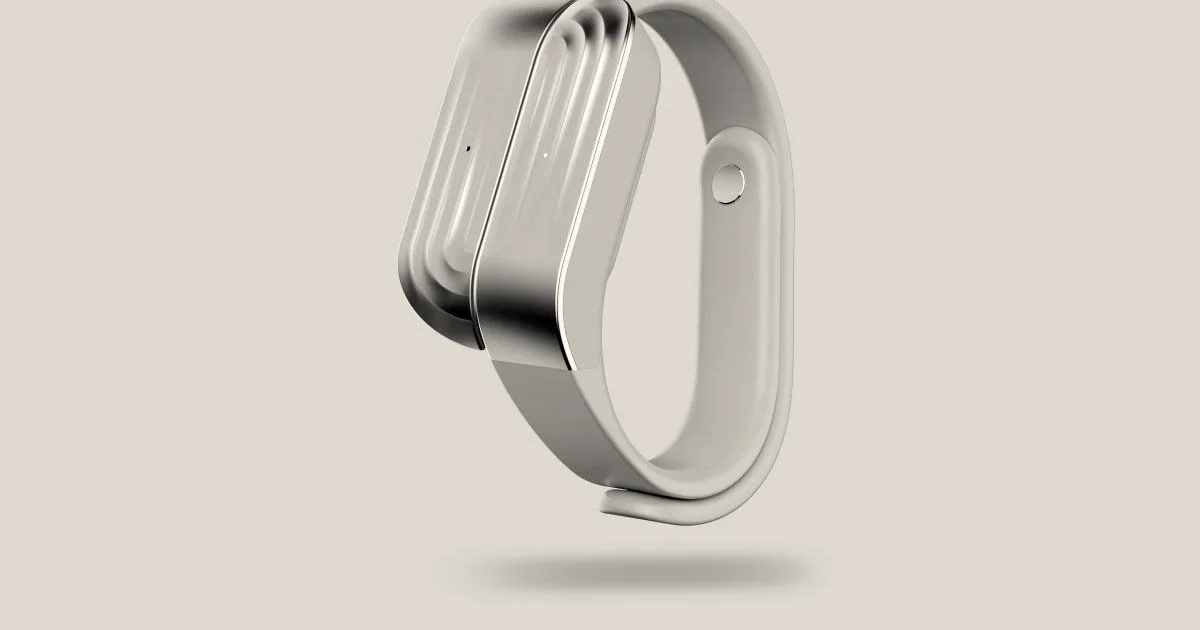
Clair Health, a startup founded by Stanford graduates Jenny Duan and Abhinav Agarwal, has raised $11.6 million in a funding round to develop a noninvasive wearable designed to track hormonal health. The funding round was led by Khosla Ventures, a venture capital firm, with participation from startup accelerator program a16z speedrun, Brydge Club, Treehub, Cartan Capital, AGI House, Insiders VC, Anne Wojcicki, and Stephanie Coleman. The company aims to replace traditional, invasive methods like blood draws with a device that monitors biomarkers continuously. Duan’s interest in women’s health originally began while she was working at a nonprofit in Portland, Oregon, before she later met Agarwal in a Stanford class focused on women’s health.
The startup’s hardware features 10 biosensors, including a biomagnetic sensor, to capture biological data. To collect user-specific data, the company uses voice-based onboarding to understand health markers. Additionally, the company reported that it has trained its own AI to analyze voice-based biomarkers and determine which phase of the cycle a user is in after a few minutes of conversation. This system is designed to help users track “inflammation and bloating” and “hormonal fluctuations” across the four phases of a menstruation cycle. Clair Health plans to ship units in November. The pricing model includes a $369 device paired with a $9.99 monthly subscription, and the company is currently testing the device with a closed group of beta users.
Investors view the technology as a necessary evolution for women’s health, particularly for managing conditions such as “endometriosis”, “PMDD (premenstrual dysphoric disorder)”, and “perimenopause”. To build its models, the company has established data partnerships with access to several million electronic health records and longitudinal health data. Mary Minno, an investor at Treehub—a Stanford-adjacent residency backed by the AI Health Fund—noted that hormonal health measurement remains archaic, with patients still relying on blood draws to understand treatment efficacy. The founders emphasize that their voice-based system addresses gaps in existing software. “With our voice stack, we are giving our users a way to communicate their own problems in their own way,” Duan said.
Why it matters
Clair Health is attempting to solve the difficulty of tracking hormonal health by creating a noninvasive wearable device that uses 10 biosensors and voice-based AI to provide actionable insights, aiming to replace archaic methods like blood draws.