Compute & Cloud
Xcimer Energy activates world's largest private laser system
Xcimer Energy has activated Phoenix, the world’s largest privately owned laser, as it hopes to complete a fusion prototype by 2028.
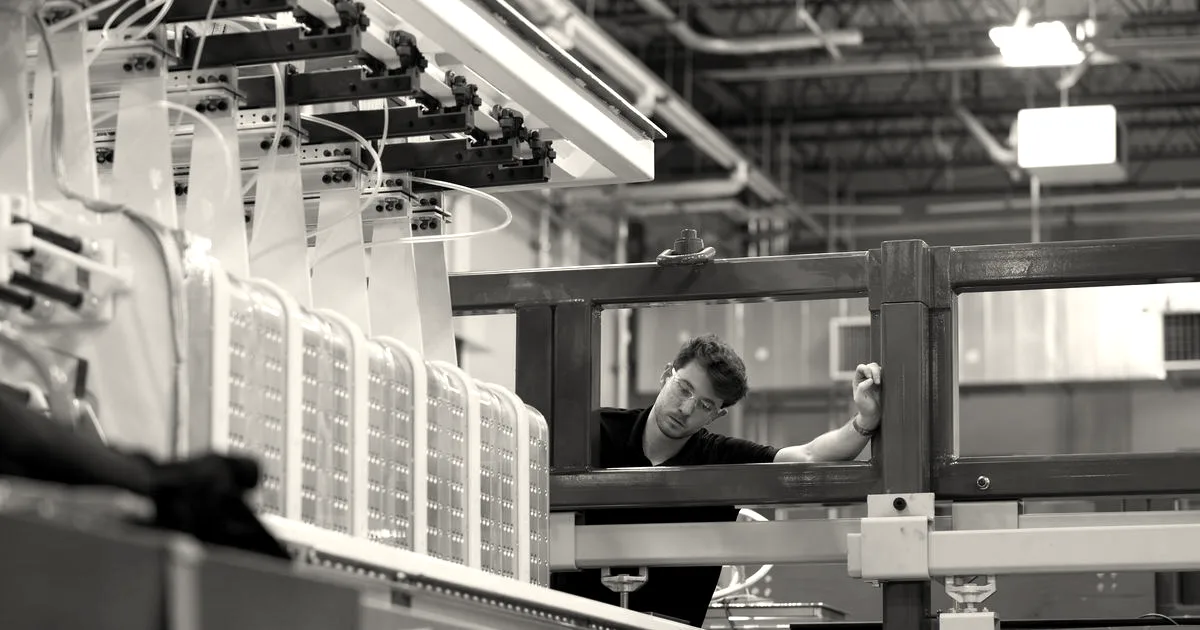
Fusion startup Xcimer Energy has officially activated its Phoenix laser system, a development that the company claims makes it the largest privately owned laser in the world. The physical scale of the system is substantial, featuring a laser core that is 38 meters long. When operating at its full strength, the system’s krypton-fluoride laser generates over 1 kilojoule of energy. The activation of the Phoenix laser system represents a key step in Xcimer’s effort to adapt the National Ignition Facility’s fusion power concept into a more profitable commercial energy source.
The technological foundation of Xcimer’s approach is modeled directly after the National Ignition Facility (NIF), which is a US government-funded fusion research facility. In December 2022, the NIF achieved a historic milestone by proving that a controlled fusion reaction could release more power than the amount of energy required to ignite it. To achieve this reaction, the NIF trained 192 laser beams on a fuel target. Xcimer is attempting to build upon this scientific proof-of-concept by developing less complex and more powerful laser systems. To do this, the startup is utilizing excimer amplification, which is a laser technology widely used in semiconductor manufacturing that Xcimer has adapted for its own fusion energy design. The company uses this excimer amplification technique to improve upon the 192-beam approach used by the NIF.
Despite the successful activation of the Phoenix system, a massive engineering gap remains between this experimental laser and a fully functioning commercial facility. Xcimer notes that while the Phoenix laser generates over 1 kilojoule of energy, a viable commercial-scale power plant would require energy levels that could exceed 12 megajoules. To bridge this gap, the company has established a multi-phase development timeline. Xcimer hopes to complete a working prototype of its system in 2028. Following the prototype phase, the company is planning to build its first commercial-scale power plant in the mid-2030s.
Why it matters
Xcimer Energy is attempting to bridge the gap between government-funded fusion research and commercial viability by adapting proven laser concepts for industrial power generation.