Chips & Hardware
Deep Care brings its Isa posture-tracking device to consumers
German startup Deep Care has launched its Isa desk device for consumers, offering posture and wellness tracking without a camera or internet connection for €299.
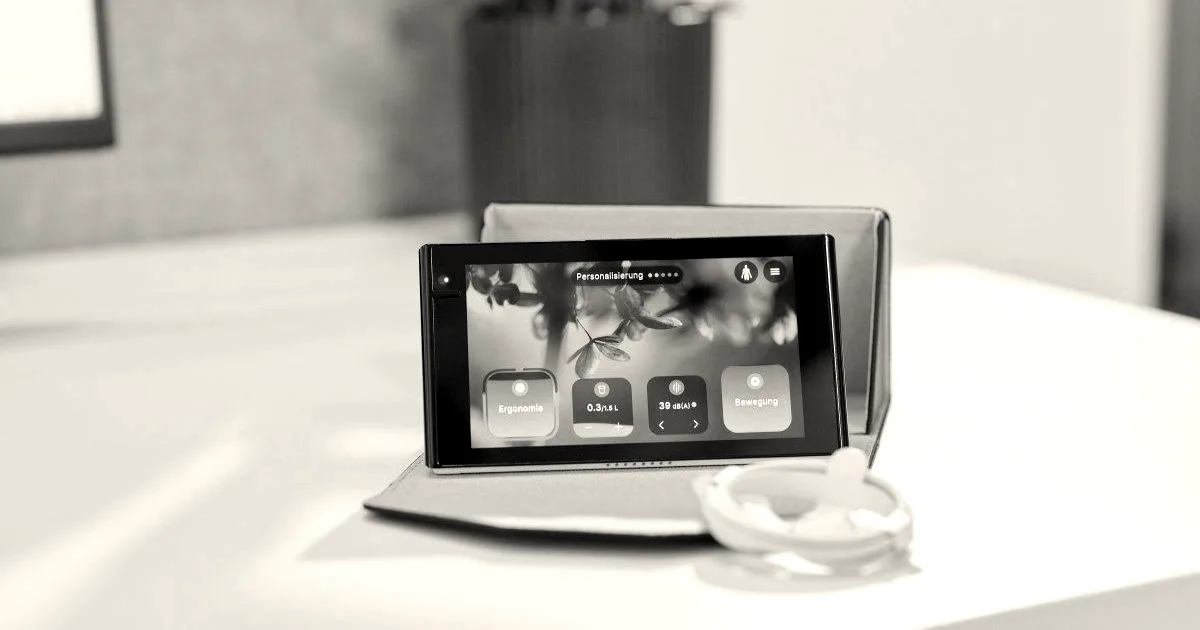
German startup Deep Care is expanding its Isa desk device from a business-to-business offering to the consumer market. The hardware is positioned as a privacy-first alternative to existing wellness applications. The device tracks posture, hydration, light, sound, and movement without requiring a camera or an internet connection. To track posture and movement, Isa uses a Time-of-Flight (ToF) 3D depth sensor, which allows the device to monitor the user’s desk environment without capturing video or transmitting data online. This sensor-only approach is designed to address privacy concerns, though it can occasionally misidentify objects like bottles or pets as a stationary person.
The physical device features a 5.5-inch screen and has a power consumption rating of roughly 2.45 W. Its sensor suite operates within a range of 0.15 meters to 1.8 meters, allowing it to track movement even when a user stands up and moves around the desk. The device’s interface displays posture using a squircle—a rounded square shape—which fills or empties based on how well the user is sitting. Currently, the company reports that Isa supports only EU and U.S. time zones, meaning it lacks support for other regions such as India or Asian time zones.
Deep Care is offering the hardware alongside a recurring subscription model. The pricing structure includes:
- Hardware cost: €299 ($354) for the physical device.
- Core subscription plan: €4.99 per month, which covers posture tracking, healthy sitting habit tracking, drinking habit detection, and an exercise library.
- Pro subscription plan: €7.99 per month, which adds tracking for environmental factors like light, noise, and CO₂ levels.
To correct posture, the device employs “mild shaming” via physical vibrations when a user slouches for too long, nudging them to adjust their stance. Looking ahead, Deep Care plans to use Isa’s sensor suite to venture into mental health-related tracking. The company reports that the device can measure breathing patterns using signals such as posture, head movement, and chest movement. Paired with environmental data like noise, light, and CO₂ levels, the company intends to use these metrics to introduce a stress-related score.
Why it matters
Deep Care’s move from B2B to consumer retail signals growing confidence in the workplace wellness hardware market and tests whether users will pay recurring subscription fees for premium desk devices.