Markets & Business
Tesla's robotaxi fleet covered fewer miles in the second quarter
Tesla's paid Robotaxi rides covered roughly 700,000 miles in the second quarter, down about 36% from roughly 1.1 million in the first quarter.
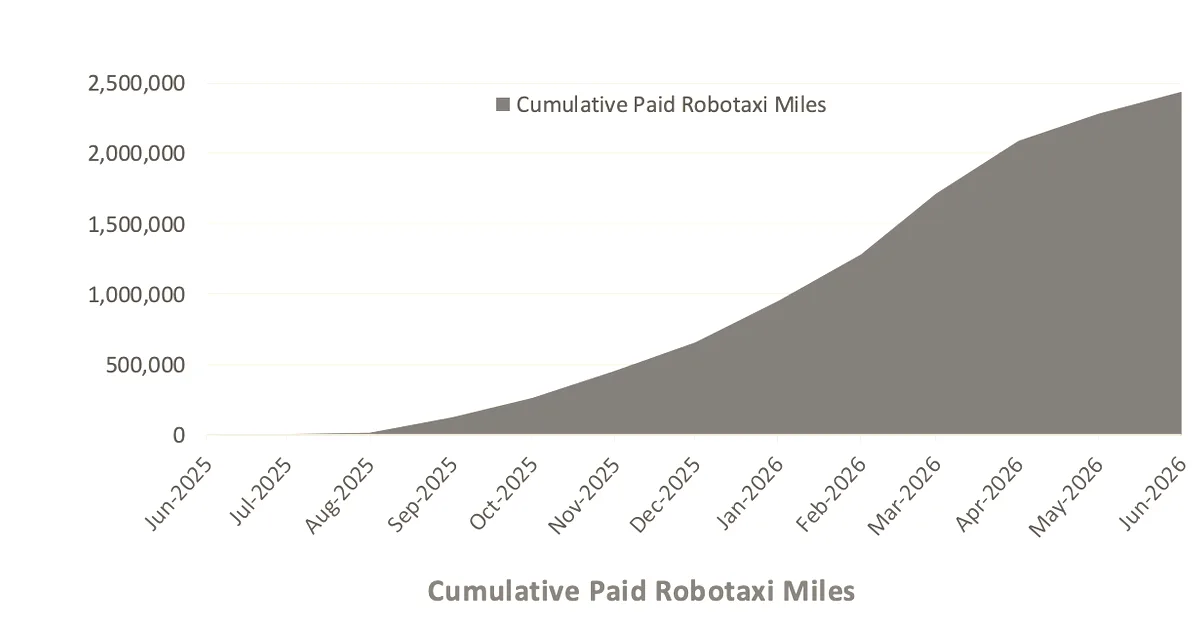
Tesla’s Robotaxi network drove fewer paid miles in the second quarter than the first, according to a chart the company released on Wednesday. The chart’s cumulative totals appear to show steady growth from August 2025 through June 2026, but broken down by quarter, Tesla’s fleet of Model Y SUVs carrying paying passengers covered around 1.1 million miles in the first quarter and roughly 700,000 in the second — a decline of about 36%. That drop came even as Tesla expanded the service to six cities across Texas and Florida. The total likely also includes paid miles from the San Francisco Bay Area, where Tesla’s branded Robotaxis still carry a safety driver and lack the state-required permits to operate autonomously.
The quarterly pullback cuts against Tesla’s rhetoric over the past year, after CEO Elon Musk pledged an aggressive push into autonomy in 2024. On the earnings call, Musk gave a new explanation for the slow scaling: Tesla still needs more driving data specific to the Cybercab, its purpose-built, two-seat robotaxi expected to eventually make up the bulk of the autonomous fleet. “We actually have to accumulate miles with Cybercabs that are retrofitted with steering wheels and acceleration and braking pedals, that kind of thing, to calibrate to the Cybercab chassis,” he said, adding that Robotaxi numbers would grow substantially once that data builds up — a shift from years of claims that Tesla’s nearly 10 million customer cars were already gathering the data needed to train future robotaxis.
Tesla executives framed the slow rollout as caution about safety. Musk noted that the US sees 30 to 40,000 automotive deaths a year with little press attention, but said a single Robotaxi injury would generate worldwide headlines and invite a regulatory clampdown, a dynamic he said the company wants to avoid. VP of AI Ashok Elluswamy said Tesla’s Robotaxis have driven more than 380,000 miles without a safety operator without any notable incidents, though he didn’t define what counts as notable, adding that other reports involved other parties hitting stationary Teslas. Tesla has reported 22 crashes to the National Highway Traffic Safety Administration in the year since the trial began, including three caused by remote teleoperators and several low-speed collisions with curbs, utility poles, and a tow truck’s bed.
The mile decline also comes amid weaker profits across Tesla’s core businesses, which missed Wall Street’s expectations in the results released Wednesday; the stock fell more than 13% in early trading the next day. Musk and Elluswamy both said unsupervised miles have grown roughly 10% every week since the service launched at the end of last year, and Musk said the company plans to keep scaling rapidly.
Why it matters
The numbers complicate Tesla’s pitch that its Robotaxi fleet is a near-term, low-cost profit engine, and suggest the company’s timeline for scaling driverless rides depends on data it doesn’t yet have. With Tesla’s core auto business also under pressure, investors now have two reasons to question how fast the Robotaxi bet pays off.