Markets & Business
Tesla revenue rises as company pivots to AI and robotics
Tesla reported $22.38 billion in Q1 revenue and positive free cash flow, even as it faces lagging EV sales and prepares for an awkward and potentially financially painful transition.
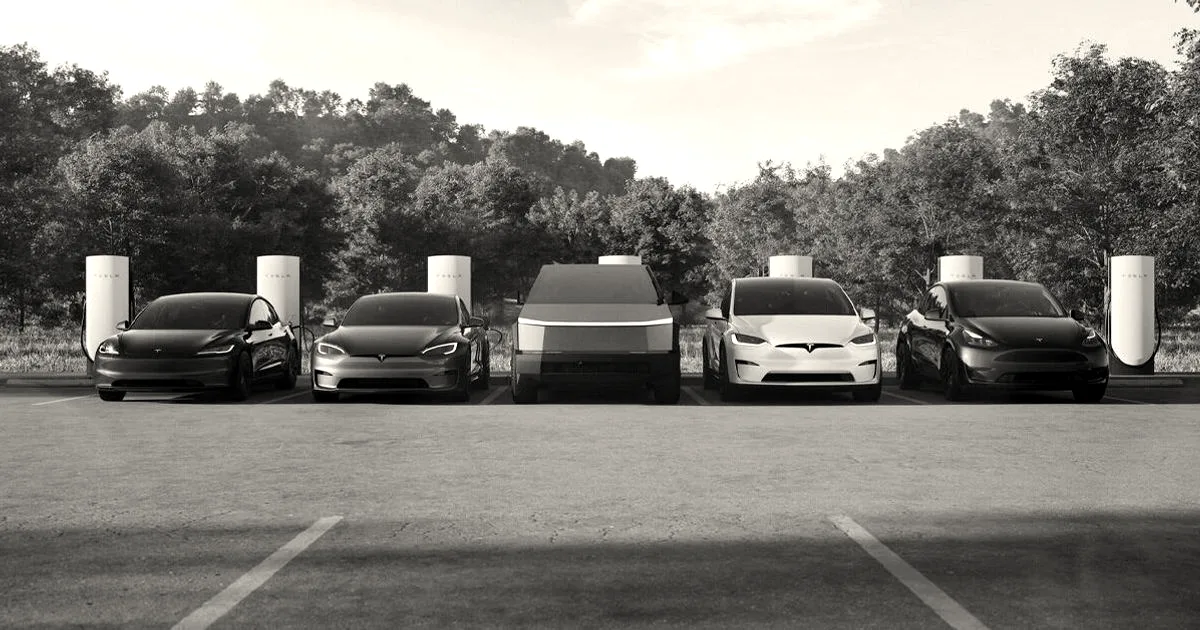
Tesla reported its financial results for the first quarter of 2026 on Wednesday, showing year-over-year growth in revenue and profit despite grappling with lagging EV sales. The company’s financial highlights for the quarter include:
- Revenue: $22.38 billion, representing a 16% increase from the $19.3 billion generated in the first quarter of 2025.
- Automotive Revenue: $16.2 billion, up from $13.96 billion in the same period last year.
- Free Cash Flow: $1.44 billion in positive free cash flow—defined as cash generated after accounting for operational and capital outflows—which exceeded analyst expectations.
- Net Income: $477 million, compared to $409 million in the first quarter of 2025.
While these figures showed year-over-year growth, Tesla delivered 358,023 electric vehicles globally during the first three months of the year, falling short of analyst expectations of around 368,000 units. The company produced 408,386 vehicles during the same period. Tesla shares experienced a brief rise in after-hours trading before falling into negative territory during the company’s earnings call.
The drop in deliveries highlights the ongoing challenge of lagging EV sales. This trend was exacerbated after the Trump administration ended the $7,500 federal tax credit for electric vehicles, which contributed to a 46% profit fall in 2025 to $3.8 billion. The Q1 2025 net income of $409 million was a 71% drop from 2024. While first-quarter results grew year-over-year, they represent a decline from previous quarters; fourth-quarter revenue was $24.9 billion and third-quarter revenue was $28 billion, with fourth-quarter profit at $840 million and third-quarter income at $1.37 billion. Despite these headwinds, Tesla saw growth in its services segment. Active subscriptions to Full Self-Driving (Supervised)—Tesla’s advanced driver assistance system—grew 51% year-over-year to 1.28 million active subscriptions.
CEO Elon Musk has warned that Tesla is undergoing an awkward and potentially financially painful transition from its core EV business to an AI and robotics company. The company has yet to scale production of its Optimus humanoid robot, which will be produced at its Fremont, California factory, or meaningfully ramp up its robotaxi service. Tesla currently operates a robotaxi service in Austin, and recently expanded it to Dallas and Houston, but access to these vehicles remains severely limited. To fund this pivot, Tesla plans $25 billion in capital expenditure for 2026. Tesla CFO Vaibhav Taneja stated that, as a result of this spending, the company will have negative cash flow for the remainder of the year.
Why it matters
Tesla is attempting to decouple its valuation from its core automotive business by aggressively funding an AI and robotics future. This strategy will consume significant capital, requiring a planned $25 billion in capital expenditure that will result in negative cash flow for the remainder of the year.