Apps & Consumer
Spotify pivots to AI-generated content and agentic tools
Spotify is rapidly integrating AI tools for content creation and agentic tasks, a strategy that can feel overwhelming as it shifts toward an "everything-audio" platform.
Spotify is adding artificial intelligence features to its application at a rapid pace, which can feel overwhelming to users. Rather than focusing solely on helping listeners find existing content, the streaming platform is expanding into AI-driven content generation. As part of this push, Spotify has signed a deal with Universal Music Group to allow fans to create AI-generated covers and remixes of songs. Additionally, the company is partnering with ElevenLabs, an AI voice technology company, to release a tool that allows authors to narrate audiobooks using synthetic voices.
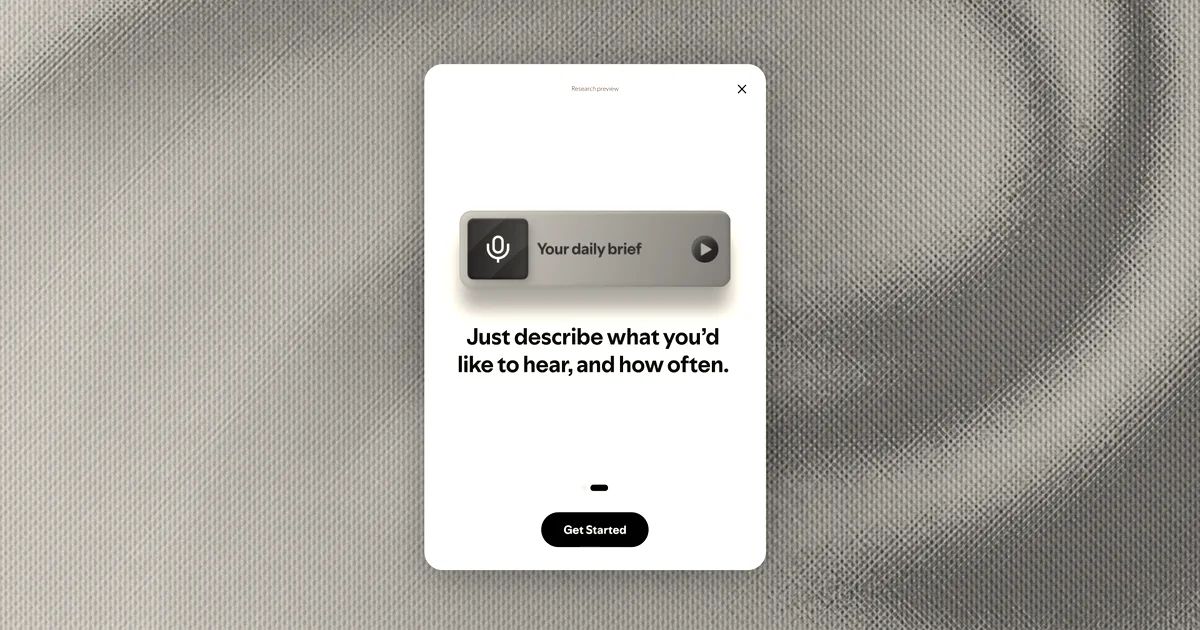
Beyond the main mobile application, Spotify is releasing an experimental desktop app that generates personalized audio briefings from user data, such as emails, calendars, and notes. This separate desktop product is gesturing toward agentic AI—software designed to autonomously complete tasks on behalf of a user. According to the app’s description, “With your permission, it can take action on your behalf: researching topics, using a web browser, organizing information, and helping complete tasks.” This move signals a broader interest in productivity tools, potentially paving the way for features like AI meeting notes in the style of Granola. Earlier this month, the company also introduced a tool for developers using AI coding assistants like Codex and Claude Code, allowing them to generate podcasts and save them to their library.
This rapid expansion represents a shift toward an “everything-audio” platform. To manage the influx of AI-generated music, Spotify previously adopted DDEX, the industry standard for identifying AI-generated tracks, to label its catalog. Now, by encouraging both professional and user-generated AI content, the company is moving from a consumption-focused model to one centered on active creation. For example, users can now build personal podcasts through prompts directly in the app, generating audio summaries of their calendars and emails.
To help users navigate this growing volume of content, Spotify is introducing natural-language discovery features for audiobooks and podcasts. This conversational search approach mirrors Google’s push toward conversational search. The platform already features an AI DJ, and users can now ask questions to get answers about specific podcast episodes or broader themes. While users might otherwise turn to external chatbots like ChatGPT or Gemini for these queries, Spotify’s integrations are designed to keep them within its own ecosystem. However, by prioritizing a broad suite of AI tools over the core discovery of human-created content, Spotify risks cluttering the user experience and diluting the focus that made its platform essential.
Why it matters
Spotify is transitioning from a consumption-focused platform to an “everything-audio” app by integrating AI tools for content generation and discovery. This strategy risks cluttering the user experience and diluting the platform’s core focus on human-created music and audio.