Apps & Consumer
Speechify launches native Windows app for local voice processing
Speechify launched a native Windows app featuring on-device dictation and text-to-speech, targeting the enterprise market among the platform's over a billion users.
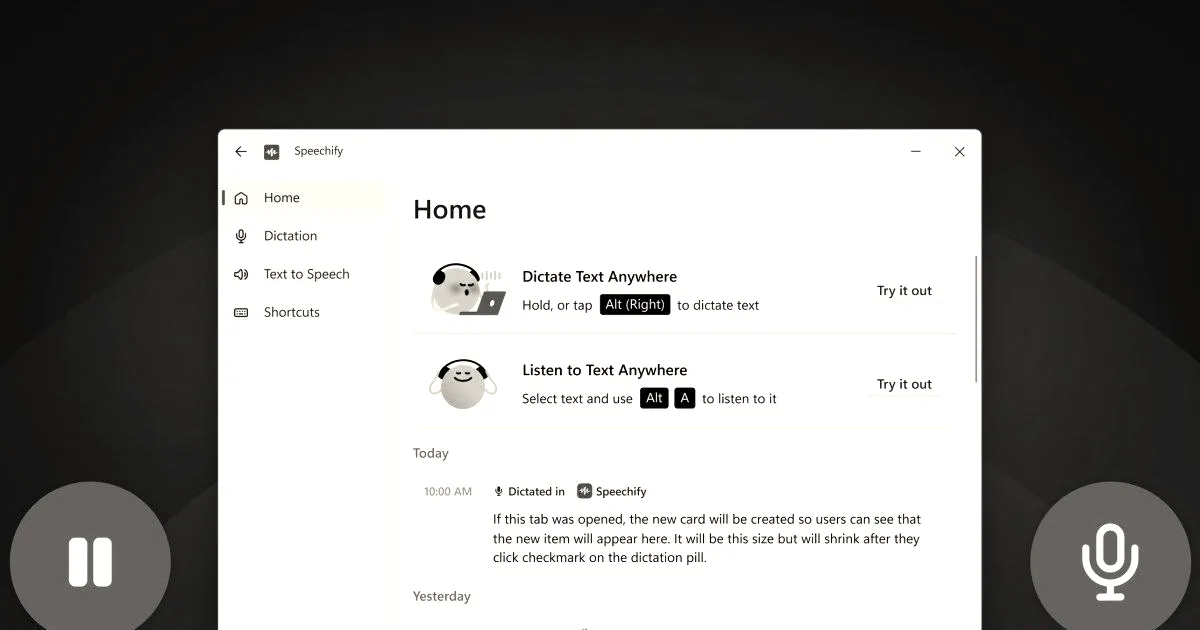
Voice AI company Speechify has launched a native Windows application that performs voice processing entirely on-device. The local processing is designed for Copilot+ PCs—which feature Neural Processing Units (NPUs, processors designed specifically for accelerating machine learning tasks) from AMD, Intel, and Qualcomm—as well as other Windows 11 personal computers equipped with Graphics Processing Units (GPUs, processors designed to rapidly manipulate and alter memory to accelerate parallel processing) from Intel and AMD.
The application runs three models locally on the user’s hardware: neural text-to-speech, real-time voice activity detection, and Whisper-powered transcription. Users can configure the application to switch to cloud-based models or change them during use. For voice activity detection, Speechify uses the Silero open-source model. For audio generation, the company uses its SIMBA model, which generates audio across seven different speed presets to read documents, articles, PDFs, or web pages aloud. With these features, Speechify is positioned to compete with specialized dictation and transcription applications such as Wispr Flow, Willow, and Superwhisper.
Speechify, which has over 50 million users, is looking to expand its reach. “Over a billion people on this planet use Windows. With this Windows launch, we’re making sure that reading, and now writing, is never a barrier, no matter what device you use or how you prefer to work. We’re especially excited about the opportunity in the enterprise given how many professionals have asked for Speechify on their PCs,” said Cliff Weitzman, founder and CEO of Speechify.
Last month, in February 2026, the company launched a meeting transcription feature, though it was limited to browser-based meetings. Now that Speechify has applications across multiple platforms, the company will likely bring this meeting transcription feature to its native applications to transcribe meetings on any application or browser. This expansion represents a shift for Speechify, which previously concentrated on text-to-speech use cases like reading articles and emails before moving toward a full-stack voice application.
Why it matters
Speechify is expanding its product suite from text-to-speech into a full-stack voice application, including dictation and meeting transcription. By leveraging local hardware capabilities on Windows, the company is positioning itself to compete directly with specialized voice artificial-intelligence tools.