Startups & Funding
LetinAR raises $18.5 million to scale AI glasses optics
South Korean startup LetinAR secured $18.5 million to scale its optical module technology for AI glasses, with a planned IPO in 2027.
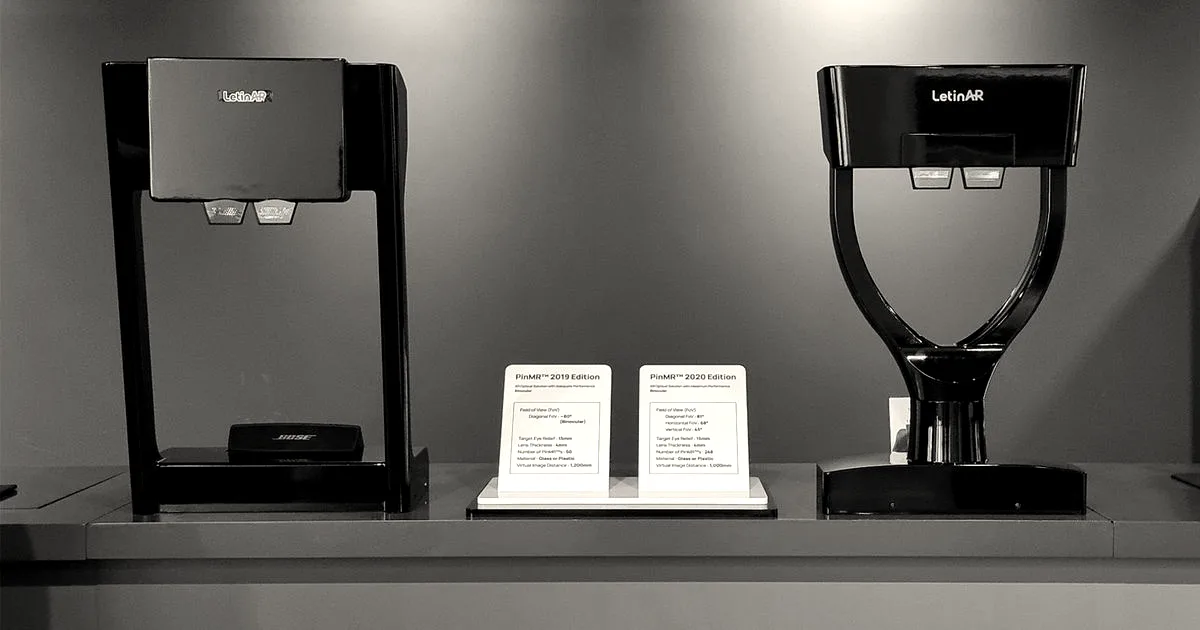
South Korean startup LetinAR has secured $18.5 million in a funding round led by Korea Development Bank, with participation from Lotte Ventures. This latest injection brings the company’s total funding raised to $41.7 million. The capital arrives as LetinAR prepares for a planned initial public offering in South Korea, which is scheduled for 2027. The startup was founded by CEO Jaehyeok Kim and CTO Jeonghun Ha. Previous investors in the company include LG Electronics, which is also a developer of its own AI smart glasses.
The investment comes amid growth in the global hardware sector. According to research firm Omdia, global AI glasses shipments are projected to cross 15 million units this year, representing an increase of more than 300% from the 8.7 million units shipped in 2025. Major consumer electronics companies are also moving into the space; Samsung is reportedly set to unveil its first AI-capable smart glasses at an event in London this July.
To capture this demand, LetinAR is focusing on the optical module—the component that projects images into a user’s field of vision. The industry currently relies on two primary optical approaches: “waveguide” technology, which splits and spreads light across a thin but power-hungry lens, and “birdbath” technology, a mirror-based approach that delivers direct light but requires a bulky structure. LetinAR claims its proprietary PinTILT technology sidesteps these trade-offs, directing light precisely to the eye to produce a brighter image in a thinner, lighter form factor using less power.
“We see AI glasses as that next platform. And the optical module is the hardest part to get right as AI glasses makers will need a lens that is thinner, lighter, and more power-efficient than what exists today,” said Jaehyeok Kim, CEO of LetinAR.
The company is already supplying its optical modules to several commercial customers:
- NTT QONOQ Devices and Dynabook: These Japanese companies use LetinAR’s modules, providing the startup with manufacturing experience at scale.
- Aegis Rider: This Swiss deep tech firm integrates LetinAR’s modules into AI-powered augmented reality helmets designed for motorcycle riders traveling at speeds up to 160 kilometers per hour. Aegis Rider is targeting the EU and Swiss markets in 2026.
Why it matters
LetinAR is positioning itself as a key component supplier for the growing AI glasses market, leveraging its PinTILT technology to address the industry’s hardware constraints.