Chips & Hardware
Even Realities hits $1B valuation with $150M funding round
Even Realities raised $150 million at a $1 billion valuation, positioning its display-first smart glasses as a profitable alternative that prioritizes privacy over camera-equipped content capture.
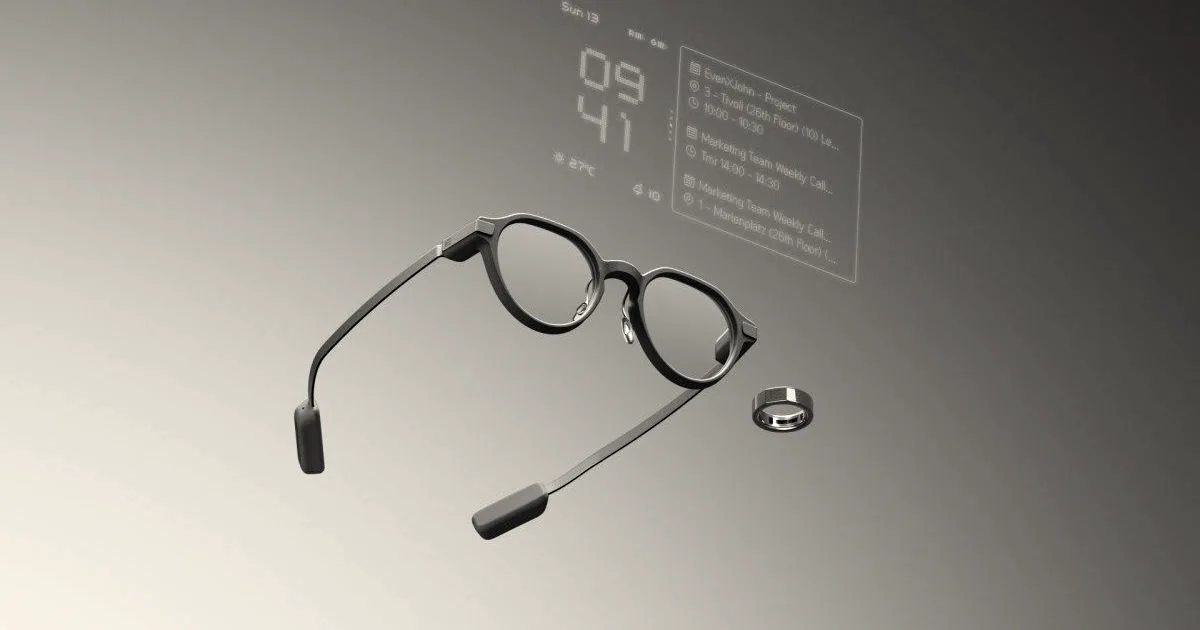
Even Realities, a smart glasses startup founded in 2023, has raised $150 million in a pre-Series B funding round. The round was led by Meituan and Tencent, valuing the company at $1 billion. The startup was founded by former Apple and Lindberg employees, and its previous backers include HSG.
The company has grown its operations and sales volume since launching its first product, the Even G1, in 2024, followed by the Even G2 in last November. Key metrics of the startup’s growth and pricing include:
- Staff expansion: The company’s workforce grew from 30-40 employees in 2024 to 300-400 employees currently.
- Sales volume: Even Realities has sold more than 10,000 pairs of smart glasses, making it the first company in its category to pass this milestone, according to founder and CEO Will Wang.
- Pricing and revenue: The frames retail for $599, with prescription lenses or a companion ring costing an additional $200-$300, bringing the average order value to roughly $1,000.
Unlike competitors that focus on camera-equipped devices, Even Realities focuses on display-first hardware that does not include a camera. The glasses utilize a heads-up display—a display technology that presents data in the user’s field of view—to feed information to the wearer. This display is controlled by a companion ring, the Even R1. The company’s software features include Conversate, an AI copilot software for smart glasses. Even Realities relies on its Holistic Adaptive Optics (Even HAO) technology to integrate the microchip, optics, and waveguide—an optical technology used in smart glasses displays.
According to Wang, this integrated approach is critical. “With a phone or a watch, the display is just a conventional OLED or LCD screen. Smart glasses are the first product category to rely on optical displays, which require an entirely different technology stack; you have to design the microchip, the optics, and the waveguide together. That’s where we’ve invested the most,” Wang said.
Even Realities manufactures its products in China but does not sell them there. Instead, its primary sales markets are the U.S., Japan, South Korea, the Middle East, and Europe. According to Wang, about a third of Even Realities users are company executives, and the startup is already a profitable player in the smart glasses space. Wang noted that smart glasses are probably the most personal computing device people will ever wear, making privacy a core focus of both the hardware and software design.
Why it matters
Even Realities’ $1 billion valuation signals a shift in the smart glasses market, where investors are increasingly backing hardware that prioritizes display technology and privacy over camera-centric content capture.