AI & Models
Physical Intelligence unveils π0.7 robot brain model
Physical Intelligence’s new π0.7 model shows early signs of compositional generalization, allowing robots to perform tasks they were never explicitly trained to execute.
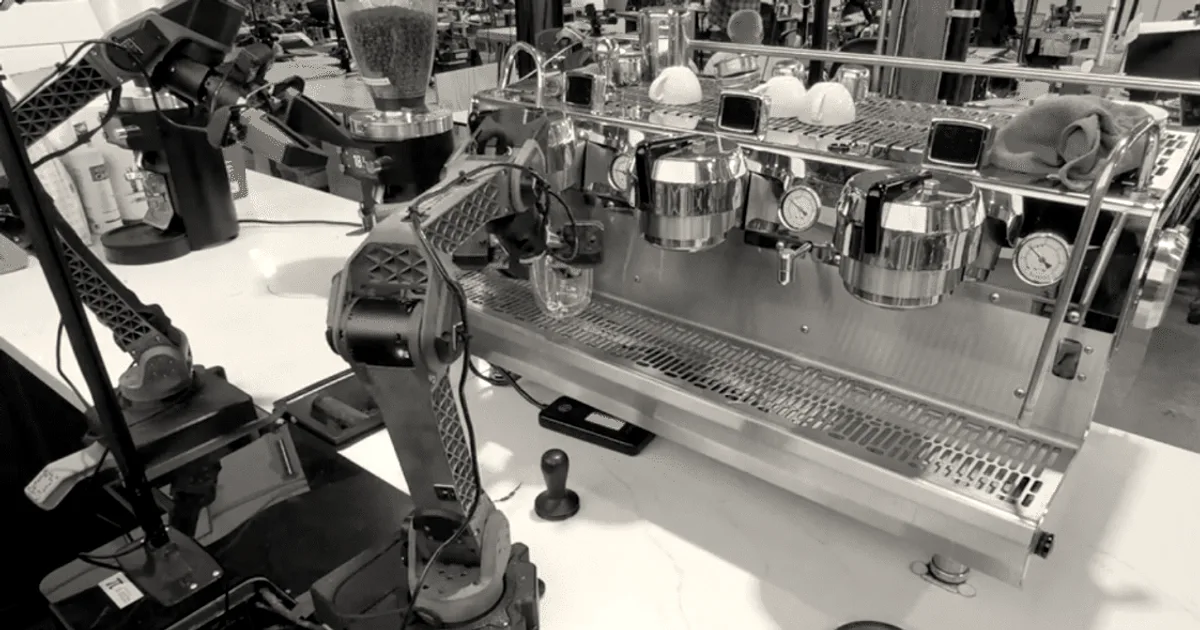
On Thursday, Physical Intelligence, a robotics startup based in the Bay Area, published new research introducing its latest model, π0.7. The model represents what the company describes as an early step toward a general-purpose robot brain. The core claim of the research is “compositional generalization,” which refers to the system’s ability to combine skills learned in different contexts to solve problems it has never encountered. Rather than relying on rote memorization of specific tasks, π0.7 is designed to remix existing data to figure out unfamiliar actions.
According to Sergey Levine, a co-founder of Physical Intelligence and a UC Berkeley professor, this ability to remix skills represents a meaningful step forward. “Once it crosses that threshold where it goes from only doing exactly the stuff that you collect the data for to actually remixing things in new ways, the capabilities are going up more than linearly with the amount of data. That much more favorable scaling property is something we’ve seen in other domains, like language and vision,” Levine said.
To demonstrate this, researchers tested the model on an air fryer, an appliance it had not been explicitly trained to use. With zero coaching, the model made an initial attempt to cook a sweet potato, resulting in a 5% success rate. However, after researchers spent about half an hour refining the verbal instructions—a process known as prompt engineering—the success rate jumped to 95%. Lucy Shi, a researcher at the company and a Stanford computer science Ph.D. student, noted that failures are sometimes caused by the researchers’ own limitations in prompt engineering rather than the model itself.
Other team members expressed surprise at the model’s adaptability. Ashwin Balakrishna, a research scientist at Physical Intelligence, explained that while he can typically predict a model’s capabilities based on its training data, the recent performance of π0.7 genuinely surprised him when the robot successfully rotated a randomly purchased gear set on command. Levine compared this surprise to the early days of large language models—which are AI models trained on text—such as when GPT-2 unexpectedly generated stories about unicorns in the Andes mountains of Peru.
The San Francisco-based startup has attracted investor interest, partially driven by co-founder Lachy Groom, an angel investor in Silicon Valley. The company’s financial footprint includes:
- Total funding: Over $1 billion raised to date.
- Most recent valuation: $5.6 billion.
- Potential valuation: Physical Intelligence is reportedly in discussions for a new funding round that would nearly double its valuation to $11 billion.
Why it matters
The π0.7 model suggests robotic AI may be approaching an inflection point where capabilities compound in ways that outpace training data, potentially enabling robots to adapt to new environments without retraining.