AI & Models
OpenAI expands Codex tools to target enterprise knowledge workers
OpenAI is expanding its Codex toolset with new plug-ins and features, targeting enterprise knowledge workers as usage grows more than three times faster than developer adoption.
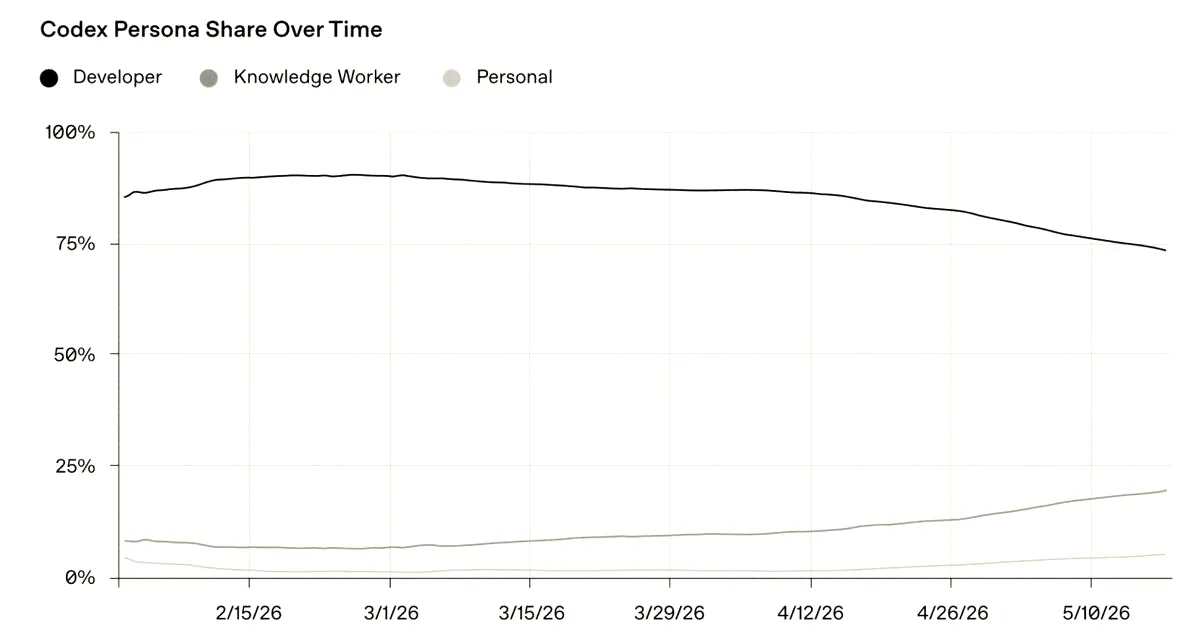
On Tuesday, OpenAI released new capabilities for Codex, its agentic tool for workplace tasks—which is AI software capable of performing tasks autonomously. The release signals a strategic shift toward enterprise knowledge work, defined as professional work involving information processing. According to an OpenAI blog post, Codex now has more than 5 million weekly active users, representing an increase of more than 6x since the launch of its desktop app in February. While developers remain the largest user group, knowledge workers now represent about 20 percent of users and are growing more than three times as fast.
To address this growing segment, OpenAI released a set of six plug-ins, which are software add-ons for specific job functions. These plug-ins target roles in data analytics, creative production, sales, product design, equity investing, and investment banking. Alongside these plug-ins, OpenAI introduced a new Sites feature, which is a capability to output work as a hosted interactive website. To support this feature, OpenAI is partnering with several technology platforms:
- Wix
- Base44
- Replit
- Lovable
- Figma
- Emergent
Additionally, a new Annotations feature provides the capability to designate specific parts of a document for commands.
These updates arrive as OpenAI faces competition in the enterprise market. Rival AI company Anthropic launched its own enterprise agents program in February, followed by finance-oriented agents in May. OpenAI previously introduced plug-in support for Codex in March. The new features also follow the recent launch of the OpenAI Deployment Company, a joint venture for enterprise clients established just three weeks prior to this release. The venture includes more than $4 billion in funding from global investment firms to integrate these systems into business workflows. Denise Dresser, OpenAI chief revenue officer, stated that “AI is becoming capable of doing increasingly meaningful work inside organizations,” noting that the next challenge is helping companies integrate these tools into their workflows.
Why it matters
OpenAI is moving beyond its developer roots to target the enterprise knowledge worker market, directly competing with rivals like Anthropic by bundling specialized tools for business workflows.