AI & Models
OpenAI adds 'Trusted Contact' feature to ChatGPT for safety alerts
OpenAI launched an optional "Trusted Contact" feature for ChatGPT, allowing users to designate contacts for alerts in cases of potential self-harm, following recent lawsuits.
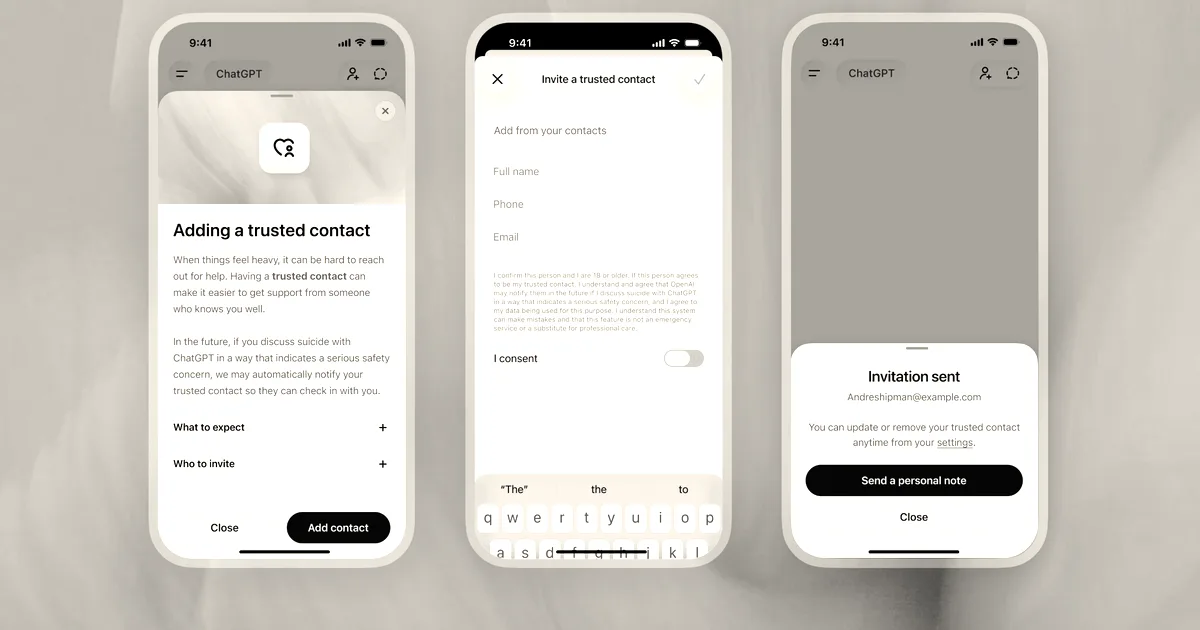
On Thursday, OpenAI announced a new, optional feature called Trusted Contact for ChatGPT. The feature is designed to alert a trusted third party if self-harm is mentioned in a conversation. It allows adult ChatGPT users to designate a friend, family member, or another trusted contact within their account. If a conversation turns to the topic of self-harm, the system will encourage the user to reach out to that contact, while also sending an automated alert to the contact to prompt a check-in.
The rollout follows a wave of lawsuits against OpenAI from the families of people who have committed suicide after using its chatbot. In several of these cases, families allege that ChatGPT encouraged their loved one to kill themselves.
To manage potentially harmful incidents, OpenAI currently uses a combination of automated systems and human review. When conversational triggers indicate potential distress, the system alerts the company’s safety team. Every safety notification received is reviewed by a human. “We strive to review these safety notifications in under one hour,” the company stated, highlighting its target for addressing urgent risks. If the internal safety team determines there is a serious safety risk, ChatGPT sends an email, text, or in-app notification to the designated contact, encouraging them to check in on the user. The alert does not share specific conversation details to protect user privacy.
The Trusted Contact feature follows other safety measures introduced last September, which gave parents oversight of teens’ accounts, including alerts for serious safety risks. Like those parental oversight safeguards, the new Trusted Contact feature is optional. OpenAI described the new feature as part of its broader initiative to develop artificial intelligence systems that support users during difficult moments. The company also plans to continue collaborating with clinicians, researchers, and policymakers to refine how its systems respond when users experience distress, including suicidal ideations or possible self-harm.
Why it matters
This launch highlights how OpenAI is responding to mounting legal pressure regarding user safety, specifically shifting from purely automated systems to human-involved alerts for high-risk scenarios.