AI & Models
OpenAI model disproves 80-year-old geometry conjecture
OpenAI’s latest reasoning model has disproved an 80-year-old geometry conjecture, marking a significant step forward in AI's ability to handle complex, multi-step mathematical reasoning.
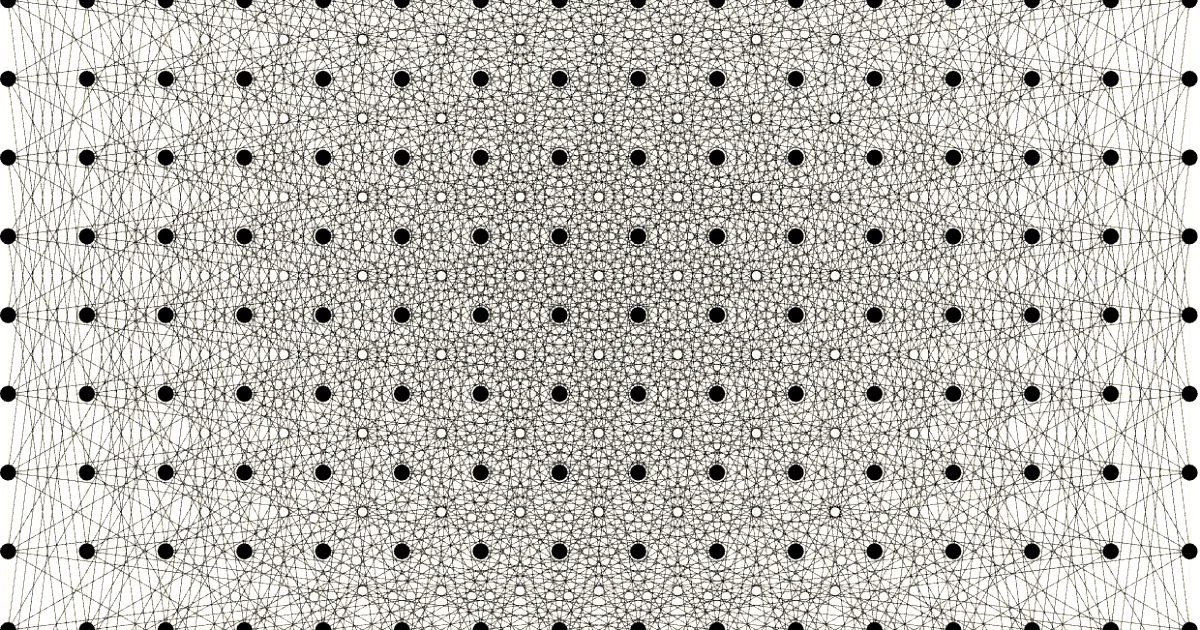
OpenAI claims its new reasoning model has produced an original mathematical proof disproving a famous unsolved geometry conjecture. The problem was first posed by mathematician Paul Erdős in 1946. For nearly 80 years, mathematicians believed the best possible solutions to this geometry problem looked roughly like square grids. However, OpenAI asserted that its model has disproved that belief by discovering an entirely new family of constructions that performs better. The company stated that this marks the first time an AI has autonomously solved a prominent open problem central to a field of mathematics. According to OpenAI, the proof came from a new general-purpose reasoning model, rather than a system specifically designed to solve math problems or this problem in particular.
The announcement follows a previous, widely criticized claim by former OpenAI VP Kevin Weil regarding the mathematical capabilities of GPT-5. Seven months ago, Weil posted on X: “GPT-5 found solutions to 10 (!) previously unsolved Erdős problems and made progress on 11 others.” Erdős problems are unsolved mathematical problems posed by Paul Erdős. However, Weil’s claim was met with immediate skepticism from rival researchers, including Yann LeCun and Google DeepMind CEO Demis Hassabis, who pointed out that the model had merely found existing solutions in the literature. Mathematicians, including Thomas Bloom, labeled Weil’s post a dramatic misrepresentation, and Weil subsequently deleted it.
Unlike that previous instance, OpenAI has provided supporting remarks from mathematicians to validate this new finding. The company published companion remarks from Noga Alon, Melanie Wood, and Thomas Bloom, who maintains the Erdos Problems website. Bloom, who had previously criticized Weil’s post, stated that AI is helping humanity more fully explore the cathedral of mathematics built over the centuries, and questioned what other unseen wonders are waiting in the wings.
The company states this development demonstrates that its general-purpose reasoning models can now maintain complex chains of logic across fields. OpenAI says this is significant because it means AI systems are now more capable of holding together long, difficult chains of reasoning and connecting ideas across fields. This capability could have broader implications for fields such as biology, physics, and engineering, where researchers must navigate complex, multi-step logical pathways.
Why it matters
This development signals a shift in AI utility: moving from simple pattern matching to autonomous, multi-step reasoning capable of contributing to fundamental scientific research.