Chips & Hardware
Hello Robot targets home assistance with $30,000 Stretch 4
Hello Robot has released the fourth iteration of its home assistance robot, Stretch, priced at $30,000, and expects to manufacture between 200 and 300 units.
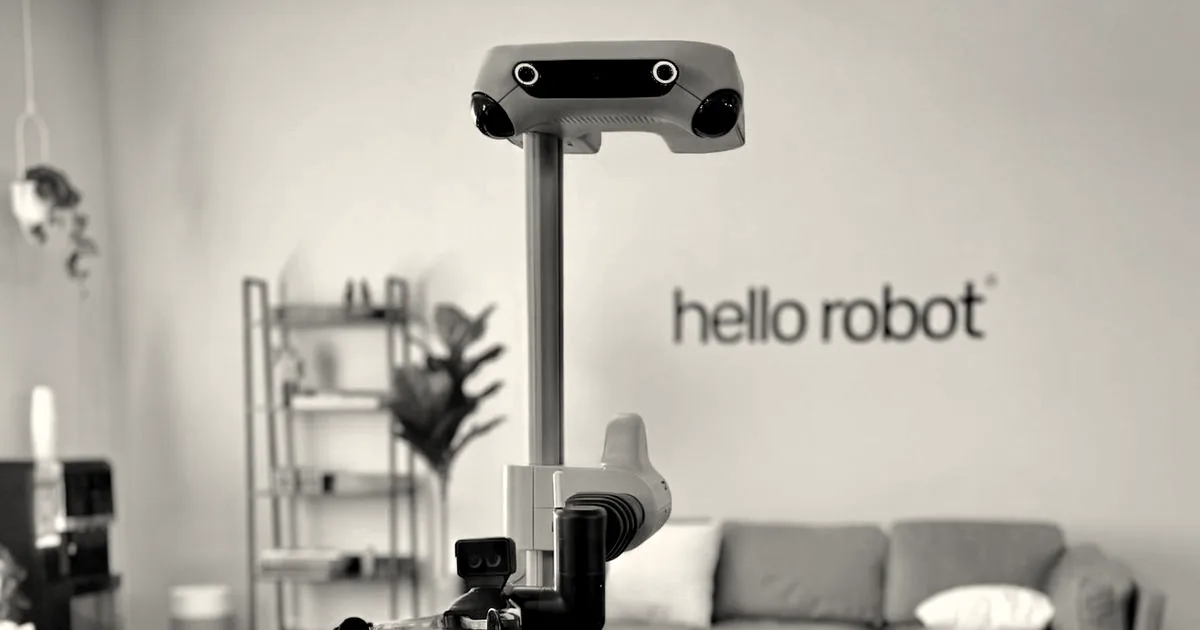
Hello Robot, a robotics startup founded in 2017 and based in Martinez, California—about 45 miles from Silicon Valley—released the fourth iteration of its home assistance robot, Stretch, last month. The robot, named Stretch 4, is priced at an affordable-for-a-robot $30,000. Aaron Edsinger, the CEO and founder of Hello Robot, expects to manufacture between 200 and 300 units at the company’s Martinez headquarters. Unlike many robotics companies operating behind glass in laboratories, Hello Robot, which was co-founded by CTO Charlie Kemp, designed Stretch to work directly in real homes with real people.
This focus on real-world deployment comes as the broader robotics sector grapples with hardware limitations. Mahi Shafiullah, a postdoc working on robotic hands at the University of California, Berkeley, described the current state of hardware as abysmal for anyone wanting to place robots in a family home. Shafiullah, who used a previous version of Stretch for research that won an award at the Computer Vision and Pattern Recognition conference (CVPR), noted that Hello Robot has taken a cautious approach by designing its technology to be around people first. This contrasts with competitors. For instance, 1X reported it sold out of 10,000 Neo robots, but as of yet, none have been delivered. Meanwhile, The Bot Company is being sued by a San Francisco Airbnb owner who says the company rented his apartment to work on its robot, which scratched furniture, broke appliances, and chipped bathroom tiles.
To gather the real-world data necessary for physical AI, Hello Robot relies on a “human-in-the-loop” design philosophy. This is exemplified by Keith Platt, an investor and board member based in Georgia. Platt became quadriplegic in 2021, only able to control parts of his shoulders, his neck and his head. He started working with Hello Robot in 2024, using a voice-operated app to control Stretch for daily tasks like drinking a protein shake. Platt noted that when he first attempted the task independently, it took nearly two hours, though he eventually reduced the time to a few minutes. Blaine Matulevich, an engineer at the company, explained that keeping the human in control is an intentional feature. This allows Hello Robot to safely accumulate operating hours to gather training data, which Shafiullah noted represents about 80% of the ingredient that matters in robotics. As Bullhound Capital, the author of a report on the robotics sector, wrote last week, “Companies that deploy first accumulate site-specific recovery loops and workflow tolerances that no competitor can buy or synthesize.”
Why it matters
Hello Robot is prioritizing real-world deployment and safety for its Stretch robot, aiming to solve the lack of useful training data by accumulating operating hours in actual homes, contrasting with competitors who focus on humanoid complexity and lab-based development.