Startups & Funding
Skyroot Aerospace becomes India’s first space tech unicorn
Skyroot Aerospace has become India’s first space tech unicorn after raising $60 million, as the startup targets a June launch for its Vikram-1 rocket.
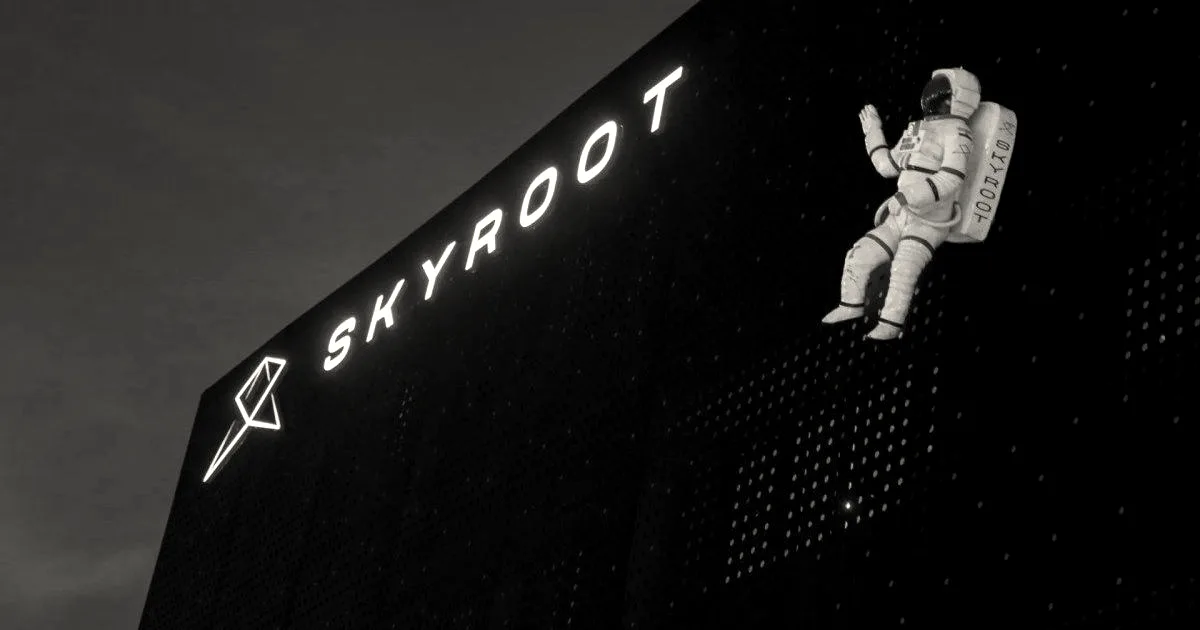
Skyroot Aerospace has raised $60 million in a new investment round, achieving a pre-money valuation of $1.1 billion and becoming India’s first space tech unicorn. The startup’s latest valuation more than doubles its previous pre-money valuation of $500 million, which it secured during its previous funding round in 2023. This valuation increase comes as global investors increase bets on India’s private space sector.
The funding consists of:
- About $50 million in primary equity co-led by Sherpalo Ventures and GIC, with participation from Playbook Partners, Arkam Ventures, and the founders of Greenko Group.
- Around $10 million in structured debt managed by funds affiliated with BlackRock.
Following the funding round, Ram Shriram, the founder of Sherpalo Ventures, will join Skyroot’s board.
The investment comes as Skyroot prepares for its first orbital launch attempt. In April, the startup flagged off its Vikram-1 rocket to India’s spaceport in Sriharikota, and it is currently targeting a June launch. Founded in 2018 by former Indian Space Research Organization (ISRO) engineers Pawan Kumar Chandana and Naga Bharath Daka, Skyroot builds satellite launch rockets that are broadly comparable to those developed by U.S.-based companies such as Rocket Lab and Firefly Aerospace. The Vikram-1 is designed to carry payloads of up to 350 kilograms (around 772 pounds) into low Earth orbit.
Skyroot previously drew attention in November 2022 after launching Vikram-S, a suborbital rocket mission that marked India’s first privately developed rocket launch. The startup plans to use the new capital to scale manufacturing, increase the launch cadence of Vikram-1 missions, and support the development of Vikram-2. The heavier Vikram-2 vehicle is expected to debut in 2027.
This growth reflects the expansion of India’s space economy, which is estimated at $8.4 billion and projected to grow to $44 billion by 2033. As of early 2026, India had nearly 400 space-tech startups. This development is supported by reforms introduced since 2020 that allow private firms to utilize facilities previously restricted to ISRO, the state-run space agency. The upcoming Vikram-1 mission comes as India seeks to build additional commercial launch capacity alongside ISRO, which has faced setbacks in recent missions, including two consecutive launch failures.
Why it matters
Skyroot’s unicorn status validates India’s private space sector reforms, signaling that local startups are increasingly capable of competing in the global launch market alongside established international players.