Startups & Funding
Biotech startup Imperagen raises £5M for enzyme engineering AI
British biotech startup Imperagen raised a £5 million ($6.7 million) seed round led by PXN Ventures to build AI models and quantum-physics simulations for faster enzyme engineering.
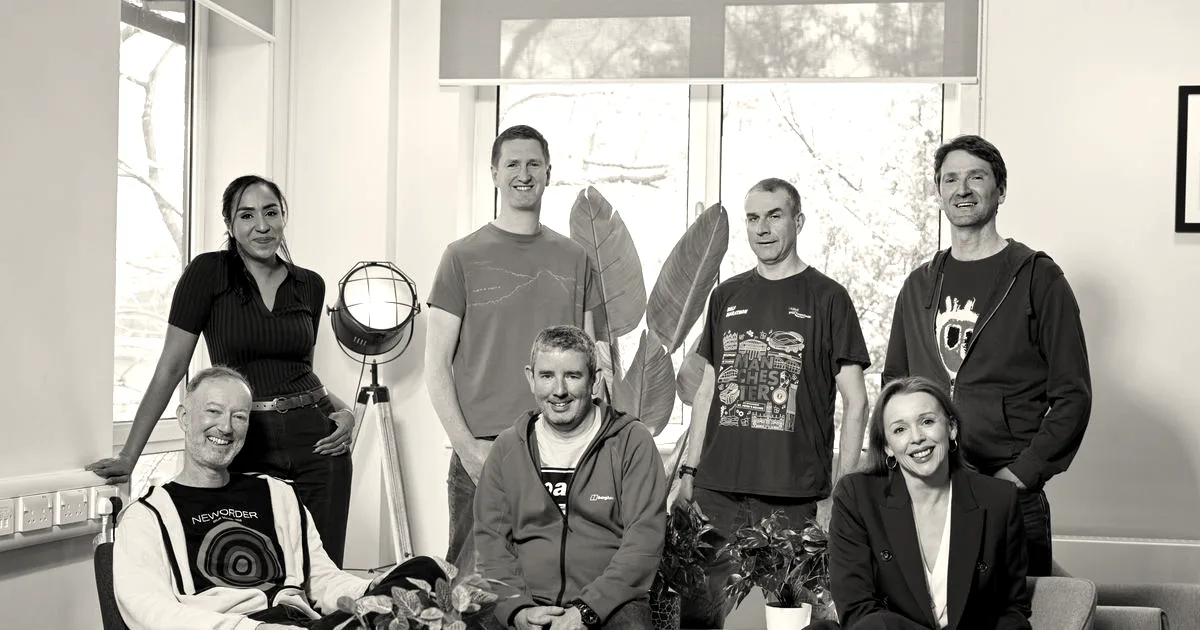
Biotech startup Imperagen announced a £5 million ($6.7 million) seed round on Thursday, led by PXN Ventures with participation from IQ Capital and Northern Gritstone. The company was founded in 2021 by Dr. Andrew Currin, Dr. Tim Eyes, and Dr. Andy Almond, scientists at the Manchester Institute of Biotechnology, and spun out of the university.
Imperagen is trying to make enzyme engineering faster, more efficient, and less costly than the slower, more physical, trial-and-error process the industry uses today. It combines three technologies: a quantum physics-based simulation that predicts how enzyme variants will behave on a computer, exploring millions of mutations without lab work; custom AI models trained on the specific enzyme problems Imperagen is trying to solve; and robots and automation that generate experimental data to retrain those AI models, in a process the company calls closed-loop simulation.
Enzymes are essential to drug development and are also used in food, biofuels, and agriculture; Imperagen is betting that speeding up enzyme engineering can have a domino effect across those industries, including making drug discovery faster. The company competes with Biomatter, Cradle Bio, and Absci in the space.
Imperagen also announced Thursday that Guy Levy-Yurista, who has a background in AI, life sciences, and enterprise technology, will become CEO, while the founders will remain at the company. He said the current enzyme-engineering process is falling short: many new AI-powered technologies can clear trial and error but fail once put into practice at industrial scale. Levy-Yurista will help build a vertical AI infrastructure for biocatalysis — the process of accelerating chemical reactions using natural catalysts like enzymes — while scaling Imperagen’s AI strategy, commercial models, and industrial partnerships.
Imperagen has now raised £8.5 million ($11.42 million) in total funding. The new capital will go toward hiring more AI specialists, research and development, expanding its experimental lab capabilities, and building a go-to-market function over the next two years. “Ultimately, Imperagen hopes wider use of engineered enzymes will help industries reliably produce products that are cleaner, safer and better for people and the planet, while also making commercial sense for the companies that adopt them,” Levy-Yurista said.
Why it matters
If Imperagen’s closed-loop approach cuts the time and cost of enzyme engineering, it could speed up development timelines across pharmaceuticals, food, biofuels, and agriculture — industries where enzyme performance is often the bottleneck.