Chips & Hardware
OpenAI's $230 AI keypad, Micro, divides early coder reviews
OpenAI's first hardware product, a $230 keypad called Micro built with keyboard designer Work Louder to pair with ChatGPT, has drawn a mixed, often skeptical reception from early coder reviewers.
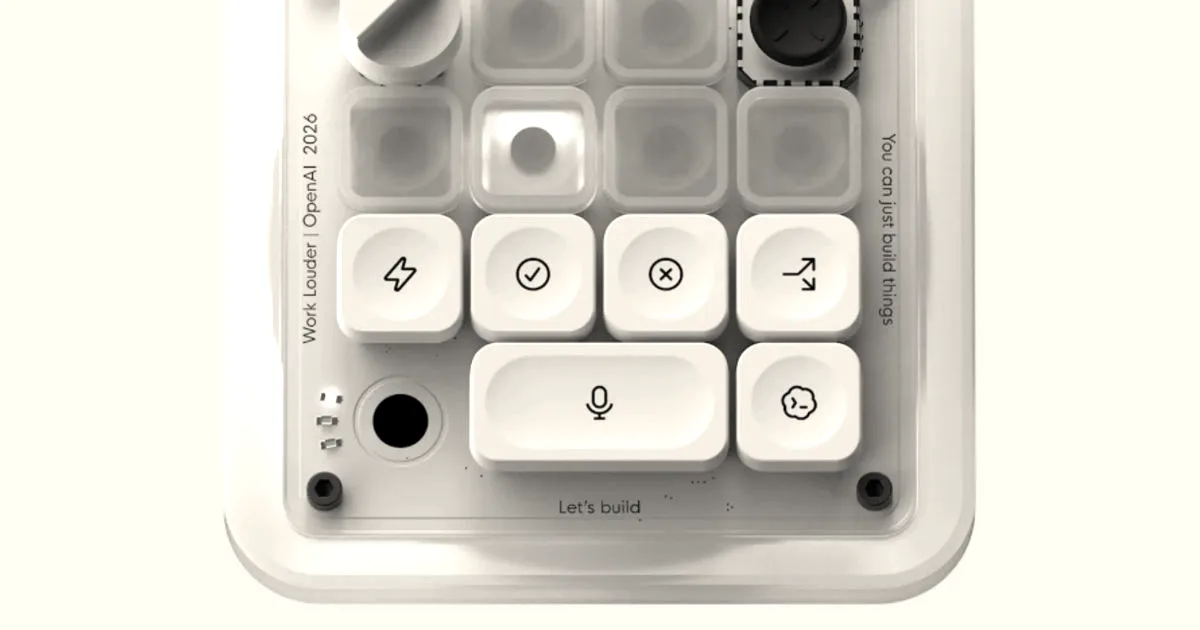
OpenAI has launched its first piece of hardware: Micro, a keypad developed with specialty keyboard designer Work Louder that’s built to pair with ChatGPT. The device costs $230 and connects to a computer via Bluetooth or USB. Its layout includes six customizable “agent” keys that can trigger specific tasks within ChatGPT or its agentic coding tool Codex, plus six command keys below them to control those programs, along with a dedicated button for voice dictation.
OpenAI’s entrance into hardware hasn’t come without drama. Several weeks ago, Apple sued the AI lab and accused it of trade theft, opening what is certain to be a long-simmering legal battle. Separately, another smart-home device supposedly in development at OpenAI — also meant to pair with ChatGPT — was reportedly built by former Apple engineers.
TechCrunch tested a Micro review unit and described it as a sturdy device with an unboxing experience that felt notably Apple-like. Users can customize the keypad within ChatGPT itself, assigning specific ChatGPT sessions or projects to individual keys and adjusting settings like key brightness. The keys are color-coded: white for an idle agent, blue for one that’s thinking, green for a completed task, and red for an error — details users need to memorize alongside which project is tied to which key.
Early reception from Micro’s core target audience, hard-core coders, has been largely negative. Reddit users have called it “a prank and not a real product,” with others saying serious coders won’t touch it, and independent outlet Aftermath published a harsher review calling the $230 price hard to justify against cheaper DIY and off-the-shelf alternatives. TechCrunch’s own testing found the device became genuinely useful once configured — pairing assigned keys with the dictation button made it easier to switch between projects — but concluded the experience depends heavily on how often someone already uses ChatGPT, since the core value proposition competes directly with just using a keyboard and mouse.
Why it matters
Micro is a modest first step compared with OpenAI’s broader hardware ambitions, and its reception so far suggests that convincing power users — let alone mainstream buyers — that dedicated AI hardware beats software running on existing devices remains an open question.