AI & Models
Google redesigns Search with new agentic capabilities
Google is launching agentic AI capabilities in Search this summer, marking the company's most significant interface update in more than 25 years.
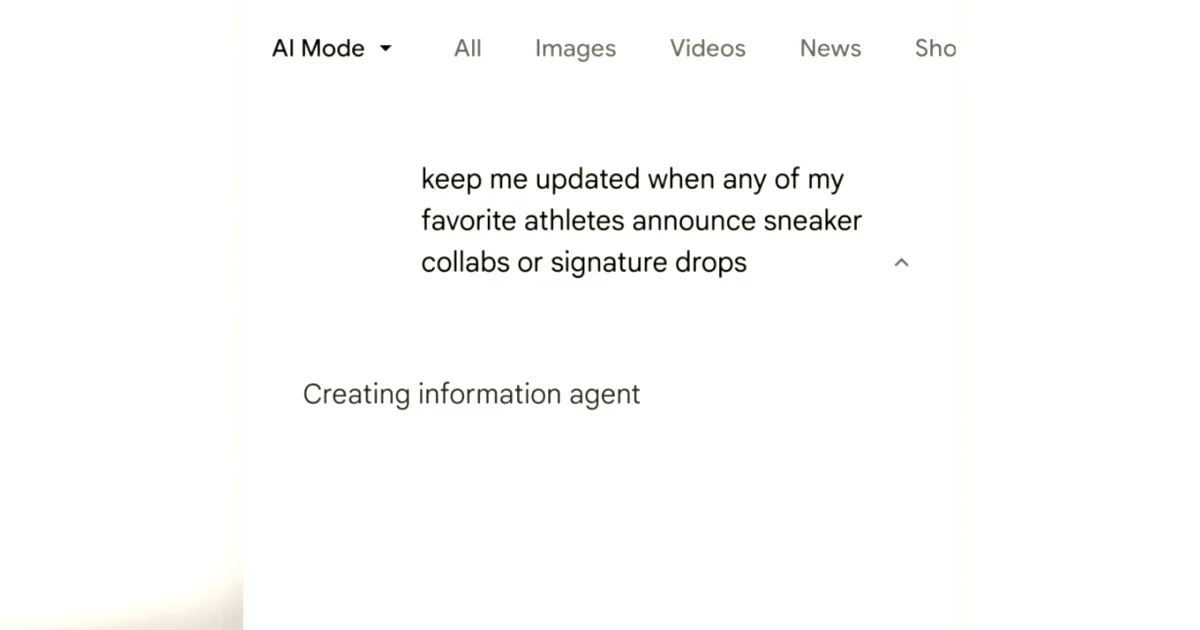
Google revealed new agentic capabilities in Search during the Google I/O 2026 keynote on May 19, 2026. The update allows users to create and manage their own AI agents directly within the platform. This new interface represents the company’s biggest change to Search in more than 25 years, shifting the platform’s focus toward conversational interactions and continuous assistance.
Unlike traditional search engines that only respond to direct, one-off queries, Google’s new information agents are designed to operate continuously in the background. Operating 24/7, these agents monitor topics of interest to keep users updated without requiring them to manually repeat the same searches. In many ways, the agents represent the next evolution of Google Alerts, the notification service that Google originally launched in 2003. However, these new agents are built to go beyond simple notifications by synthesizing information from multiple sources to provide ongoing updates.
To use the feature, users can open the new AI Mode in Search and enter a prompt to establish an agent. When relevant information is found, the Google app sends a push notification to the user. Active tracked topics are saved in the user’s AI Mode history, allowing them to manage, refine, or turn off the active agents.
The launch of these Search agents comes alongside other AI updates from Google. The company updated its Gemini app to compete with rival chatbots ChatGPT and Claude. Additionally, Google introduced Gemini Spark, a 24/7 agent assistant.
The information agents will be available this summer. Google plans to roll the feature out first to subscribers of Google AI Pro and Google AI Ultra—the company’s subscription tiers for the initial rollout—within the U.S. market.
In addition to the information agents, the broader redesign of Search introduces what Google describes as an “intelligent search box.” This interface is designed to support longer, more conversational queries, moving away from traditional keyword-based searches.
Why it matters
Google is shifting its Search strategy toward agentic AI systems that take initiative and assist with ongoing tasks rather than just answering single questions. This transition represents a fundamental change in how users interact with the web, moving Search from a reactive query tool to a proactive assistant.