Startups & Funding
How to get into a16z’s competitive Speedrun accelerator
Andreessen Horowitz’s Speedrun accelerator, which accepts less than 1% of applicants, offers up to $1 million in funding and operational support for early-stage startups.
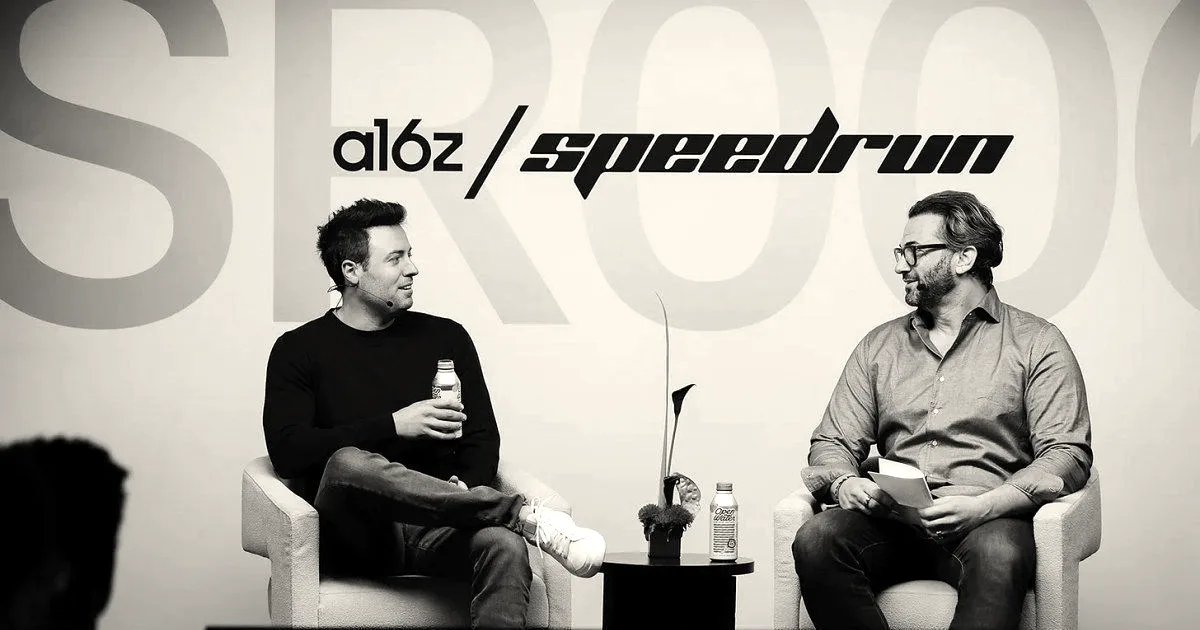
The Speedrun accelerator, launched in 2023 by venture capital firm Andreessen Horowitz, has quickly become a highly competitive program for early-stage startups. In January, the program reported that over 19,000 startups pitched for its latest cohort, with fewer than 0.4% accepted. While the program originally focused on gaming, Joshua Lu, general manager and partner at a16z, stated that Speedrun is now a horizontal program, meaning it is industry-agnostic and open to founders from any sector. The program runs for about 12 weeks in San Francisco, accepting around 50 to 70 startups per cohort.
The program’s financial structure is more equity-expensive than traditional accelerators, but it offers a larger capital injection. Speedrun invests up to $1 million per company, structured as follows:
- Andreessen Horowitz Speedrun: Typically invests $500,000 upfront in exchange for 10% of the startup’s company via a SAFE note (Simple Agreement for Future Equity). It provides an additional $500,000 if the startup raises its next funding round within 18 months, under terms agreed to by other investors.
- Y Combinator: By comparison, the competitor accelerator program typically takes a fixed 7% of the company for an initial $125,000 investment, alongside an additional $375,000.
To balance its higher equity cost, Speedrun provides startups with extensive operational support, including access to the firm’s advisory networks for marketing, hiring, and brand strategy, alongside $5 million in credits for vendors such as AWS, OpenAI, Nvidia, and Deel.
For founders looking to apply when applications open in April, Lu emphasizes the importance of team dynamics. He noted that the program prefers founding teams with a shared history and complementary skills, rather than glaring capability gaps. Because artificial intelligence has accelerated product development, the selection team looks for startups that already have early market validation—a small spark that the program can help expand.
Mohamed Mohamed, founder of the proptech startup Smart Bricks, which recently raised $5 million, advised applicants to avoid over-optimizing for hype. “Instead of polishing buzzwords, we focused on clarity — the real problem, why it’s structurally hard, and why our team is unusually well-positioned to solve it,” Mohamed said. Lu also advised founders to actively seek exposure to the accelerator’s 600-person organization, where the vast majority of staff operate as support specialists rather than investors.
Why it matters
Speedrun represents a high-stakes, high-support model for early-stage funding that prioritizes deep operational integration over simple capital injection, setting a distinct bar for founders.