Chips & Hardware
Group14 opens South Korea factory for silicon battery materials
Group14 has started production at its South Korea-based BAM-3 factory, which is capable of producing up to 2,000 metric tons of silicon battery materials annually.
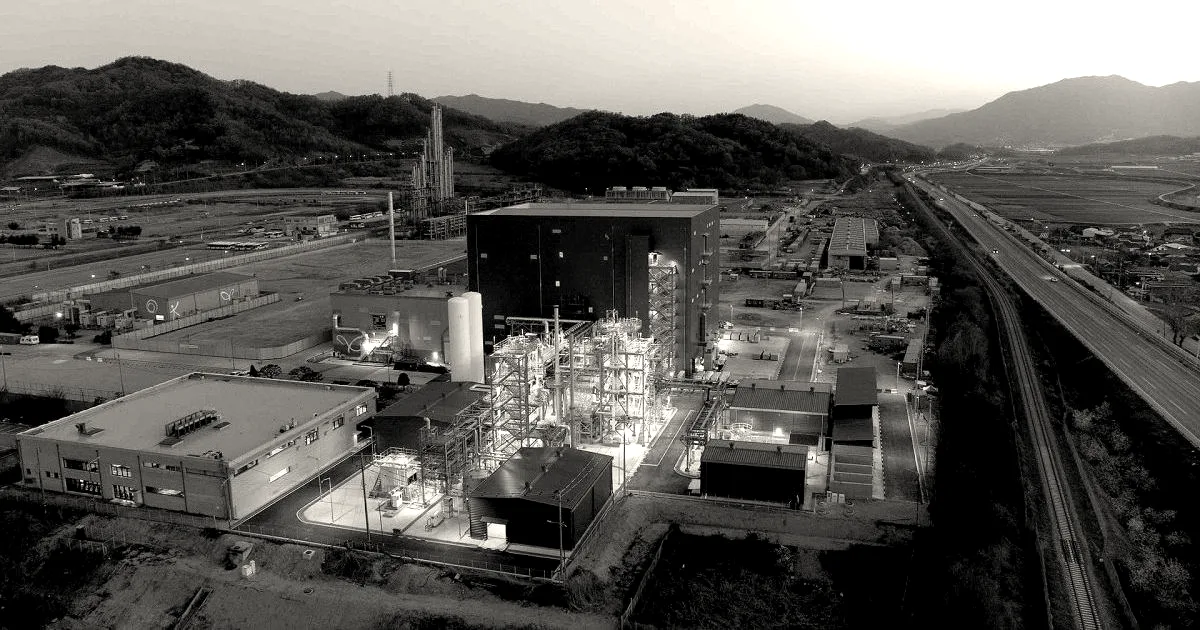
On Thursday, Group14 announced the start of production at its BAM-3 factory in South Korea. The facility is capable of producing up to 2,000 metric tons of silicon battery materials annually. This output is equivalent to 10 gigawatt-hours of energy storage, which is enough for about 100,000 long-range electric vehicles (EVs). The launch is part of the company’s effort to scale the manufacturing of silicon anodes—battery components that increase energy density compared to traditional carbon-based anodes.
The BAM-3 facility was originally a joint venture between Group14 and SK, a Korean battery manufacturer. SK previously owned a 75% stake in the project but sold its entire stake to Group14 last summer. The factory’s production focuses on materials designed to bypass the durability issues historically associated with silicon. While silicon can store up to 10 times more lithium ions than carbon, pure silicon anodes tend to swell and crumble during repeated charging. Group14 addresses this by using a hard carbon scaffold to hold the silicon particles in place, preventing the anode from expanding or breaking down.
This structural stability enables flash charging, a high-speed charging capability that could allow EVs to charge in minutes. Some of Group14’s partners, such as Molicel, are utilizing the material for designs that can charge a battery from flat to full in 90 seconds. This shift could allow automakers to reduce the size and weight of battery packs. “I’ve got a Rivian with a 130 kilowatt-hour battery in it, which is ungodly expensive,” said Rick Luebbe, co-founder and CEO of Group14. If flash charging becomes widely available, carmakers could move away from heavy, expensive batteries designed solely to deliver 300 miles to 400 miles of range to ease consumer anxiety.
The push toward faster charging is already visible among major players. Last week, Chinese EV maker BYD revealed a new battery pack capable of flash charging from 10% to 70% in five minutes. Luebbe stated he believes BYD is using silicon-carbon in its new battery, asserting that it has to be. Group14 also counts Porsche’s battery division Cellforce Group, StoreDot, and Sionic among its partners, with Porsche also acting as an investor, while wearable maker Whoop uses materials from competitor Sila.
Why it matters
Silicon anodes are critical for increasing energy density and enabling faster charging in EVs. Group14’s new capacity at the BAM-3 facility represents a key step toward scaling this technology for mass adoption.