Apps & Consumer
Google pushes AI deeper into Workspace to defend enterprise lead
Google updated its Workspace suite with new AI-powered automation tools, including a feature that claims to populate spreadsheets 9x faster than manual entry.
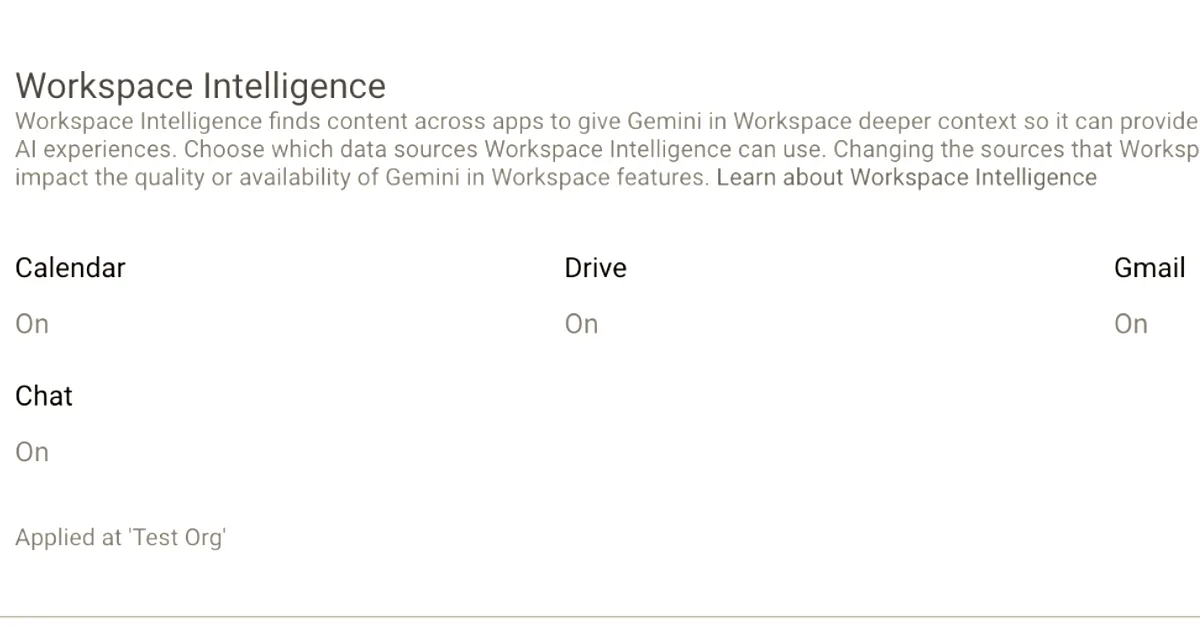
At Google Cloud Next this week, Google announced new updates to Workspace, its subscription-based productivity suite. The updates center on Workspace Intelligence, a new AI system built into the office suite that is designed to automate assistance across various tasks. The system draws on a user’s Workspace data, including Gmail, Calendar, Chat, and Drive, which encompasses Docs, Slides, and Sheets. Google has given users administrative control over what the AI system can see and access, allowing them to disable access to particular data sources at any time. However, a tradeoff exists: the more data the system can access, the more effectively it can assist the user.
Among the updates are new features for Google Sheets, the company’s spreadsheet tool. Users can now build and fill out spreadsheets by prompting Gemini, Google’s AI system. Prompts can include formatting and data retrieval, allowing the AI system to handle tasks that previously required manual human effort. This integration includes a prompt-based filling feature for data entry. Google claims this new feature allows users to populate spreadsheets 9x faster than manual entry, as the system is designed to infer what the user is going to enter. Additionally, another new Sheets feature allows users to convert unstructured data into organized tables.
Google has also introduced new AI writing capabilities to Google Docs, powered by the Workspace Intelligence system. Users can prompt Gemini to generate, write, and refine documents. The system draws on data from a user’s Drive, Chat, and Gmail archives, as well as the internet, to assist with editorial tasks. Users can prompt Gemini to help them write or ask it to match their writing style so that it can mimic their voice.
The rollout of these automated tools comes as tech companies compete for enterprise customers. Google has an advantage in this race because its office products are already embedded in workplaces worldwide, providing a built-in audience for these upgrades. However, the company faces direct competition from rivals like Microsoft and Apple, which are also targeting the enterprise market with their own tools.
Why it matters
Google is racing to deploy AI-powered office tools to maintain its advantage in the enterprise market against competitors like Microsoft and Apple.