Apps & Consumer
Google says AI defenses reduced malicious apps in 2025
Google reports a decline in policy-violating apps and banned developer accounts for 2025, crediting AI-powered security systems for deterring bad actors from the Play Store.
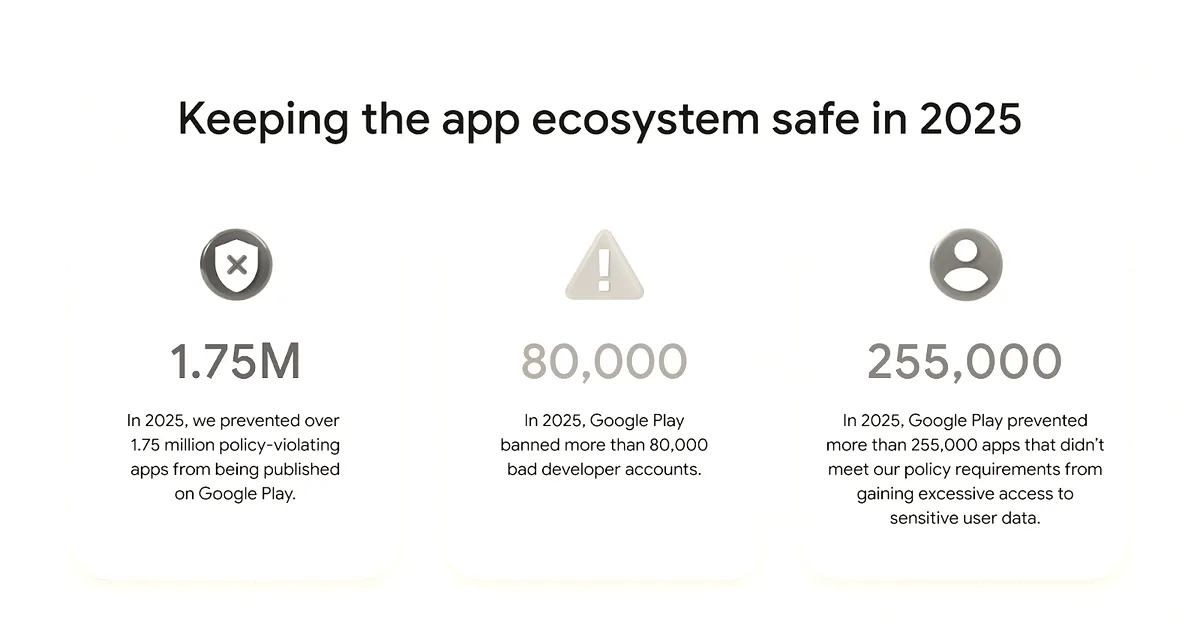
On Thursday, Google released its latest Android app ecosystem safety report, which details the company’s efforts to secure Google Play and protect users in 2025. The annual report offers an analysis of how the company reviews and monitors applications to protect the ecosystem. The data shows a year-over-year decline in both policy-violating apps prevented from being published on Google Play and banned developer accounts. Google attributes this downward trend to its increased investments in proactive security systems and artificial intelligence.
The decline in blocked activity over the last three years is detailed below:
- Policy-violating apps prevented: 1.75 million in 2025, down from 2.36 million in 2024 and 2.28 million in 2023.
- Banned developer accounts: more than 80,000 in 2025, down from 158,000 in 2024 and 333,000 in 2023.
Google credited its multi-layer protections powered by artificial intelligence with discouraging bad actors from publishing malicious apps. The company has integrated generative AI models into its app review process to help human reviewers identify complex malicious patterns faster. Google currently runs over 10,000 safety checks on every app and plans to increase its AI investments in 2026 to stay ahead of emerging threats. These systems are designed to protect users against malware, financial fraud, privacy invasions, and sneaky subscriptions.
The company’s report highlighted several key security outcomes from 2025:
- Google prevented more than 255,000 apps from gaining excessive access to sensitive user data, down from 1.3 million in 2024.
- The company blocked 160 million spam ratings and reviews.
- It prevented an average 0.5-star rating drop for apps targeted by review bombing.
“Initiatives like developer verification, mandatory pre-review checks, and testing requirements have raised the bar for the Google Play ecosystem, significantly reducing the paths for bad actors to enter,” Google stated.
While threats directly targeting the Play Store decreased, bad actors appear to be shifting their tactics. Google Play Protect, Android’s built-in malware protection system, identified more than 27 million new malicious apps outside of the official store in 2025. This represents a significant increase from the 13 million non-Play Store apps identified in 2024 and five million identified in 2023. The findings seem to suggest that bad actors are now more often avoiding the Play Store when targeting users with their malicious apps.
Why it matters
Google’s data suggests that proactive AI-driven security is successfully raising the cost of entry for bad actors on the Play Store, though threats are shifting to non-store channels.