Apps & Consumer
Google eases Android sideloading rules following Epic settlement
Google is introducing an "advanced flow" setting to allow Android users to sideload unverified apps while maintaining security protections, following its recent antitrust settlement with Epic Games.
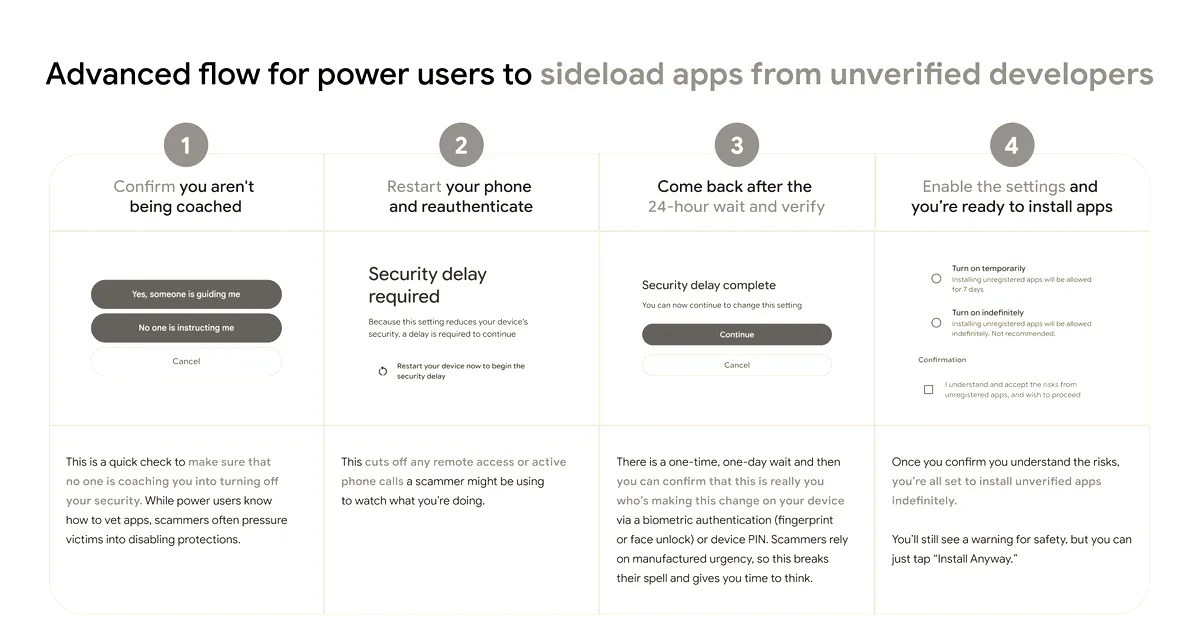
Google is introducing an “advanced flow” setting to allow users to sideload Android apps—which means installing applications from sources outside the official Play Store—while maintaining security protections. This update follows the settlement of the company’s lengthy antitrust battle over the Android app ecosystem with Epic Games earlier this month. Last year, Google announced that it would require all Android apps to be registered by verified developers to run on certified devices, a measure aimed at preventing unverified installations. The new setting provides an alternative path for users who want the freedom to install unverified apps, allowing them to turn off the verification requirement.
Following the settlement of the lengthy antitrust battle over the Android app ecosystem with Epic Games, Google is adjusting its fee structure for developers. The company will drop Play Store commissions for in-app purchases, introducing the following rates:
- A base commission of 20% on in-app purchases.
- An additional 5% commission if developers choose to use Google’s billing system.
The new “advanced flow” is designed to balance user choice with protection against security threats. Google established the verification requirements to limit the ability of bad actors to distribute malware, conduct financial fraud, and steal users’ personal data. To bypass these protections, users must manually enable developer mode in system settings. Google explained that this multi-step process helps prevent the “one-tap” bypasses often used by fraudsters, noting that scammers tend to exploit fear to create a sense of urgency in their victims. The process also includes a one-day waiting period and requires biometric authentication or a device PIN to confirm the change. Once the setup is complete, users can choose to enable unverified app installation for a duration of seven days or indefinitely. Even after the process is complete, users will still see a warning that the app is from an unverified developer, which they can bypass with a single tap.
The security measures come amid rising concerns over digital fraud. Globally, 57% of adults experienced a scam in 2025, according to a report by the Global Anti-Scam Alliance cited by Google. Alongside the new security flow, Google is introducing free, limited distribution accounts. These accounts are designed for students and hobbyists, allowing them to share apps with a small group of up to 20 users. This allows developers to distribute their software to a limited audience without the standard verification requirements.
Why it matters
This update represents a shift in Google’s control over the Android ecosystem, balancing the pressure to open up sideloading following legal challenges with the ongoing need to protect users from fraud.