Startups & Funding
Commonwealth Fusion Systems raises $1B, its largest round since 2021
Commonwealth Fusion Systems has raised $1 billion in new funding, its largest round since 2021, taking its total funding to $4 billion as it works toward a 2027 breakeven milestone.
Commonwealth Fusion Systems (CFS), already the best-funded company in the fusion power industry, is extending its lead. The startup announced Thursday that it raised $1 billion in a new round backed by “significant institutional investors, such as pension funds, sovereign wealth funds, and infrastructure and industrial corporate partners,” the company said, declining to name the specific backers when asked by TechCrunch. The round brings CFS’s total funding to $4 billion and is its largest since a $1.8 billion raise in 2021 — topping the $863 million round it added in August, whose investors included Nvidia, Google, Khosla Ventures, and Breakthrough Energy Ventures.
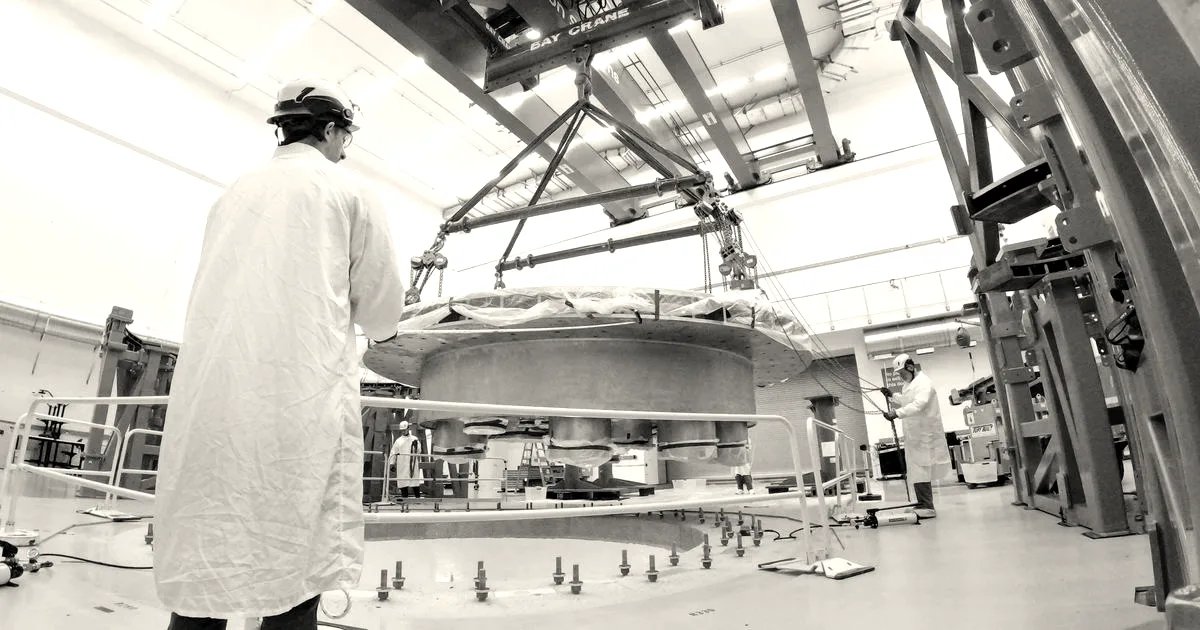
The new capital arrives as CFS’s spending ramps up. The company is building Sparc, its demonstration reactor, while finalizing the design of Arc, its first commercial power plant, planned for Virginia. CFS said the funding will go toward commercializing fusion, and CEO Bob Mumgaard has hinted the company will continue raising capital. Neither Sparc’s nor Arc’s price tag has been disclosed, though former Virginia governor Glenn Youngkin said in 2024 that Arc would be a multi-billion-dollar fusion power plant.
CFS pursues magnetic confinement fusion, in which powerful magnetic fields confine plasma inside the reactor, keeping it dense and hot enough to spark fusion reactions between atomic nuclei — reactions that release energy the company plans to harvest to power a steam turbine. CFS says Sparc has made significant progress and now expects it will achieve scientific breakeven in 2027: the milestone at which a reactor’s fusion reactions release more energy than it takes to ignite them. That’s not enough to send electricity to the grid, but hitting it would show investors that CFS’s approach is likely to work. To date, only one fusion device — at the Lawrence Livermore National Laboratory’s National Ignition Facility — has reached scientific breakeven.
Arc already has buyers lined up. Italian energy company Eni has said it will buy more than $1 billion worth of electricity from the plant, while Google has committed to purchasing 200 megawatts — half of Arc’s total planned output.
Why it matters
Fusion investing is shifting from pure research bets toward institutional capital pricing in a delivery timeline: pension funds and sovereign wealth funds joining the cap table, alongside Eni and Google committing to buy Arc’s output before it’s built, signal growing confidence CFS can hit its 2027 breakeven target.