Chips & Hardware
Neurophos raises $110M to build optical AI processors
Neurophos raised $110 million in Series A funding to develop optical processing units, which the company expects will outperform traditional silicon GPUs by mid-2028.
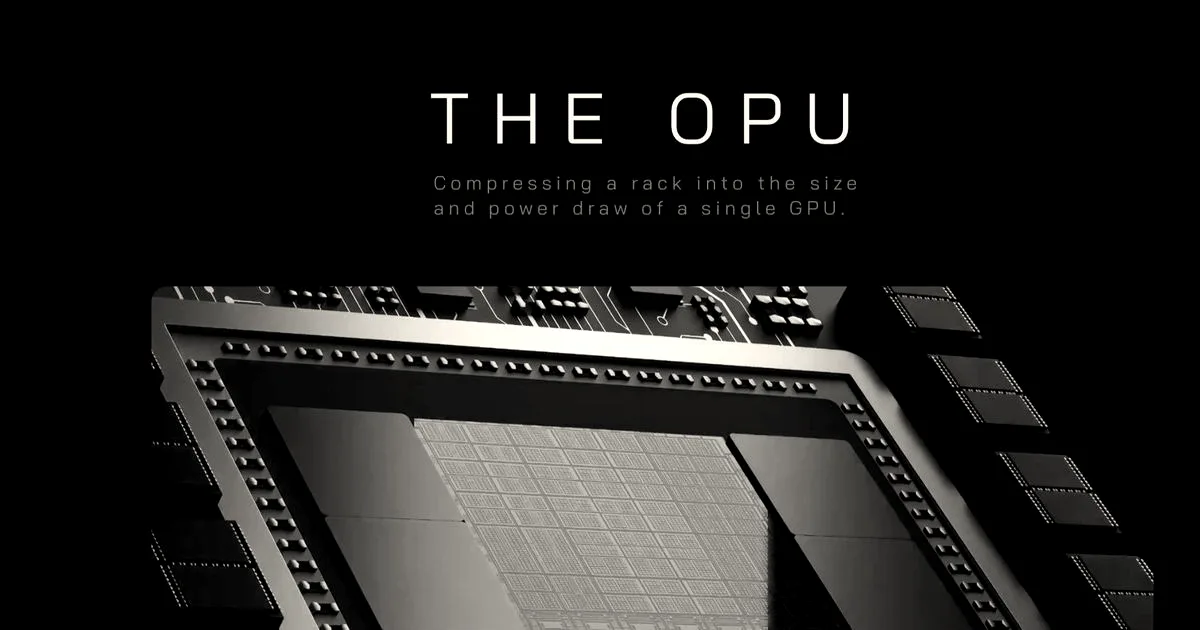
Neurophos, a photonics startup spun out of Duke University and the incubator Metacept, has raised $110 million in a Series A funding round. The round was led by Gates Frontier, with participation from investors including Microsoft, Carbon Direct, Aramco Ventures, Bosch Ventures, Tectonic Ventures, and Space Capital. The Austin-based company plans to use the capital to develop optical processing units (OPUs) designed to address the energy efficiency and scaling bottlenecks of running trained AI models, a process known as inferencing. To support this expansion, the company is expanding its headquarters in Austin, Texas, and opening an engineering site in San Francisco.
To bypass the physical limits of traditional silicon, Neurophos uses a metasurface modulator—an optical component used for matrix vector multiplication—to perform the mathematical calculations central to AI workloads. The company claims this metasurface is about 10,000 times smaller than traditional optical transistors, allowing thousands of modulators to fit on a single chip. This design allows the chip to perform more calculations in the optical domain before converting the data back to electronic signals. According to CEO and co-founder Dr. Patrick Bowen, “If you want to go fast, you have to solve the energy efficiency problem first. Because if you’re going to take a chip and make it 100 times faster, it burns 100 times more power. So you get the privilege of going fast after you solve the energy efficiency problem.”
Neurophos claims its chip architecture delivers a 50x advantage in energy efficiency and raw speed over Nvidia’s Blackwell architecture. The company compares the performance specifications of its projected chip against the Nvidia B200:
- Neurophos OPU: Operates at 56 GHz, delivering a peak of 235 Peta Operations per Second (POPS)—a measure of computing performance—while consuming 675 watts of power.
- Nvidia B200: Delivers 9 POPS while consuming 1,000 watts of power.
Bowen notes that traditional silicon improvements are tied to TSMC manufacturing nodes, which improve energy efficiency by about 15% on average every few years.
The startup is expecting its first chips to hit the market by mid-2028. Despite the multi-year timeline, Bowen stated that Neurophos has already signed multiple customers. Microsoft is also looking very closely at the company’s products. Dr. Marc Tremblay, corporate vice president and technical fellow of core AI infrastructure at Microsoft, stated that modern AI inference demands monumental amounts of power and compute, requiring a breakthrough on par with the leaps seen in AI models themselves.
Why it matters
Neurophos is attempting to solve the energy efficiency and scaling problems of AI inferencing by using metasurface modulators to create optical processing units, which they claim significantly outperform current silicon-based GPUs.