Apps & Consumer
Figma updates platform to bridge design and development workflows
Figma launched new code layers, motion support, and AI-powered plug-ins to help teams iterate on designs without needing to write production-ready code.
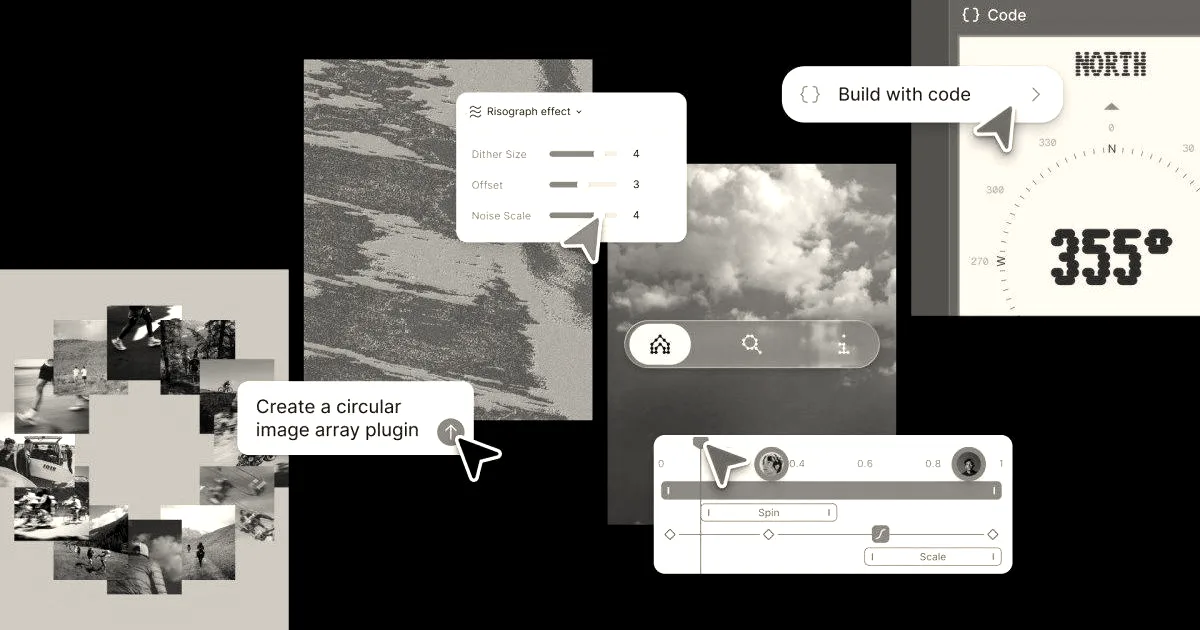
On Wednesday, Figma, a collaborative design platform, showed off an update to its platform that introduces code layers—a new feature allowing code integration directly into the design canvas—alongside support for motion and shaders, and AI-powered custom plug-ins. The update builds on the company’s ongoing efforts to connect design and development. Last year, Figma unveiled Figma Make and acquired Weavy. The company has also launched integrations with AI coding integrations Claude Code and Codex to improve the hand-off between coding and design.
The newly introduced code layers allow product teams to clone repositories and extract flows from code to design layers for testing. This feature is designed to function within Figma’s collaborative design environment, which the company calls its multiplayer canvas. The update also adds support for motion and shaders, including 3D transforms and shader effects, allowing designers to work with these visual elements directly. According to Figma’s chief product officer, Yuhki Yamashita, this collaborative space is intended to change how designers, engineers, and product managers work together by allowing them to explore ideas without focusing on the quality of the code.
“We think the multiplayer canvas is really powerful because this is an environment where you don’t really care about the quality of the code. If you’re rapidly exploring or need to kind of explore a bunch of new directions, you can do that in this spatial way. We hope that this feature produces different behavior not just with designers, but also with engineers and PMs,” Yamashita said.
In addition to code layers, the update expands Figma’s AI capabilities by allowing users to connect tools like Notion, a productivity and collaboration software; Granola, a productivity tool; Excel, Microsoft’s spreadsheet software; and GitHub, a code hosting and development platform, to provide more context. Users can also generate custom plug-ins using AI. Additionally, Figma is working to improve the integration between its main platform and Weavy, the node-based tool it acquired last year. In an update rolling out later in the year, users will be able to generate Weavy workflows directly within Figma.
Why it matters
Figma is actively reducing the friction between design and development by allowing teams to iterate on ideas in a collaborative space without the immediate burden of writing production-ready code. This shift expands the platform’s utility beyond traditional design, directly involving engineers and product managers earlier in the product development lifecycle.