AI & Models
Unconventional AI launches image model to test new chip architecture
Unconventional AI, led by Naveen Rao, released its first image-generation model, Un-0, while claiming its oscillator-based architecture could eventually reduce AI power consumption by as much as 1,000 times.
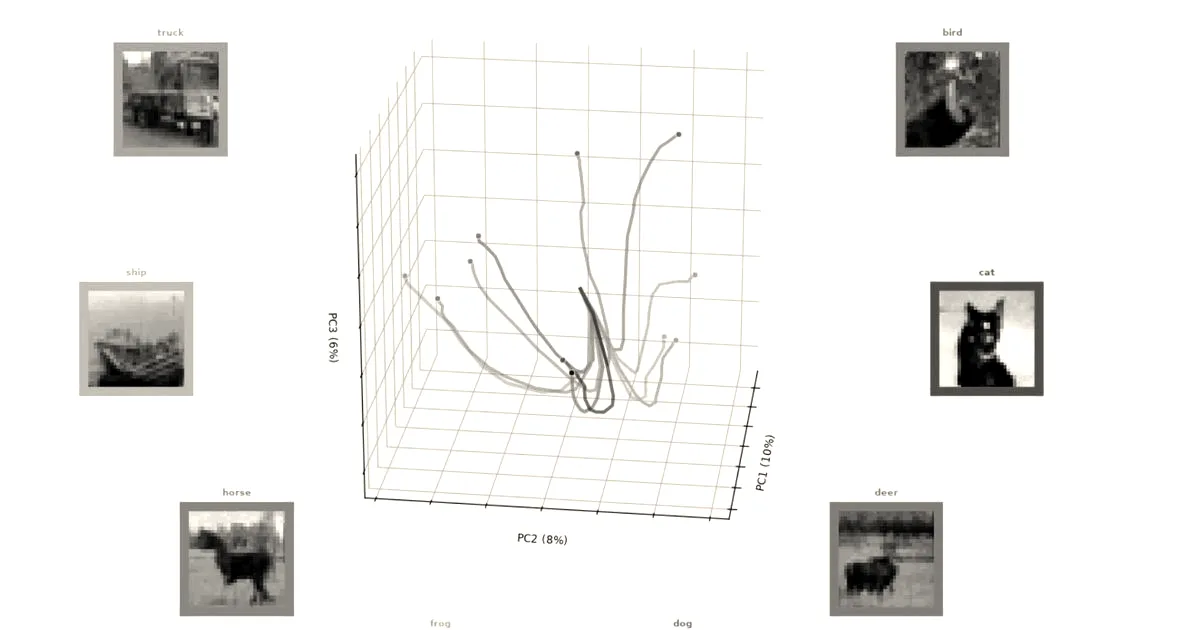
On Thursday, Unconventional AI released its first model, Un-0, an image-generation system. The startup, led by Naveen Rao, the former head of AI at Databricks, is using the model as a proof-of-concept for its hardware approach. Unconventional AI promises to make inference processing—the process of running an AI model to generate output—more power efficient. The company is attempting to achieve this by rebuilding computing architecture from the ground up using a new oscillator-based computer architecture.
The newly released Un-0 model performs similarly to existing image-generation systems, such as Stable Diffusion or OpenAI’s GPT Image 1. However, the underlying architecture is entirely different from the chips that power conventional computing. While Un-0 currently runs on a software simulation of the company’s oscillator chips, Rao believes the technology will ultimately reduce power use by as much as 1,000 times. Rao described the release as a basic demonstration of a new type of computer, noting that the company expects to share more significant updates over the coming year.
The company, which currently has less than 50 employees, plans to release schematics for an actual physical chip soon. From there, the plan is to build an entire inference stack from the ground up, with Unconventional AI eventually supplying compute capacity. Rao explained that the company intends to run AI models on systems built from its own chips, allowing prompts to enter and inferences to exit through a network cable while using a fraction of the power.
This roadmap is aimed at addressing the broader industry challenge of energy-limited AI scaling. As the demand for compute capacity grows, the physical availability of power is becoming a hard bottleneck for the sector. According to Naveen Rao, the founder of Unconventional AI, “AI scaling is hard because of energy. It’s going to be the fundamental limit in the next few years. You just can’t go past it. It’s going to be an energy-limited problem, at the end of the day.”
Why it matters
AI scaling is hitting a hard energy ceiling, and Unconventional AI is attempting to bypass this bottleneck by rebuilding computing architecture from the ground up rather than optimizing existing software.