Chips & Hardware
China's CASC lands reusable rocket booster at sea
China's state-owned CASC successfully recovered a Long March rocket booster at sea, making China the second country to achieve orbital booster recovery.
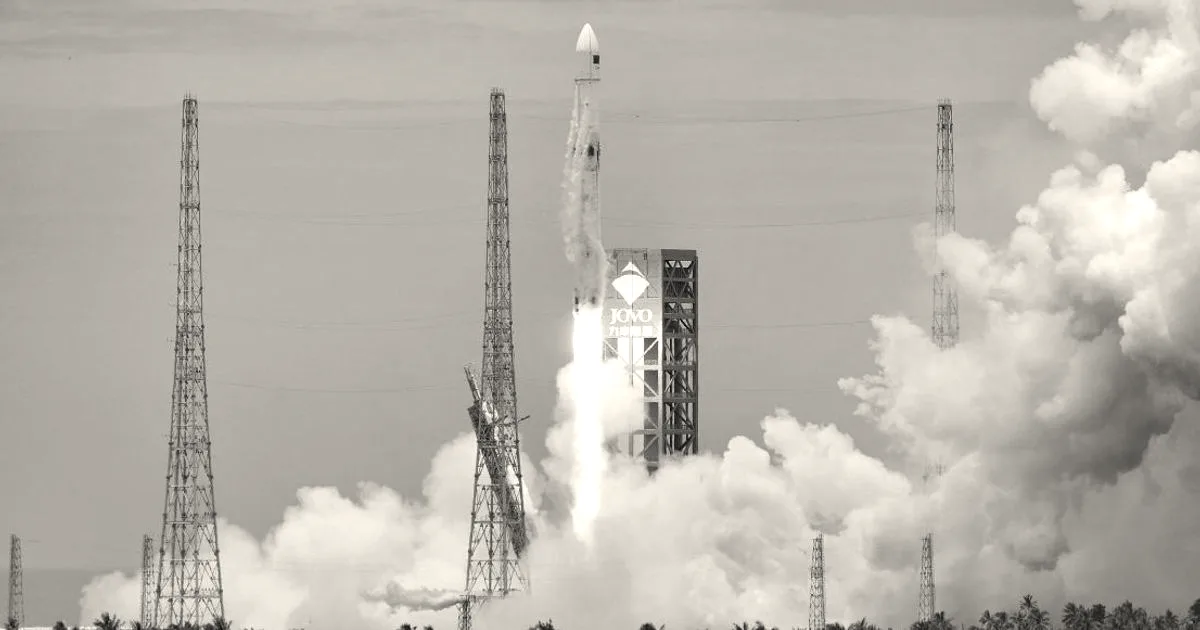
China’s state-owned space company, the China Aerospace Science and Technology Corporation (CASC), launched a Long March orbital rocket on Friday and landed its booster on a seagoing recovery vessel, making China the second country to achieve orbital booster recovery.
CASC plans to attempt to reuse the booster, which can carry about as much payload as SpaceX’s Falcon 9, by the end of the year. Unlike Falcon 9, which unfolds landing legs to settle onto a floating platform, China’s approach uses netting strung across a frame aboard the recovery ship to capture the descending rocket as it comes down.
Victoria Samson, chief director for Space Security and Stability at the Secure World Foundation (a space security nonprofit), said reusable boosters could drop China’s launch costs tremendously, letting Beijing offer cheap launches to potential allies as soft power outreach. She described the demonstration as a “huge game changer…When China figures out how to reuse them, that is going to drop the launch of cost for them tremendously and then they could use it as part of their soft power outreach to launch things for potential allies very cheaply.” That capability could let China’s satellite networks compete with SpaceX’s Starlink in Africa, the Middle East, and Southeast Asia. The milestone comes just days after a consortium of investigative journalists reported that China and Russia are cooperating on ways to damage Starlink because of its successes in Ukraine.
SpaceX is expected to make another Starship launch attempt this month, as it continues breaking launch records with its Falcon 9 fleet, which underpins Starlink as well as its work for NASA and the U.S. Space Force. Other U.S. companies are chasing similar reusability. Blue Origin recovered a booster in 2025, but one of its rockets exploded on the launch pad in May, delaying further attempts. Rocket Lab is developing its Neutron booster with reuse in mind, while Stoke Space is building a fully reusable rocket.
Why it matters
China’s successful booster recovery signals it is poised to match SpaceX’s cost-saving reusable rocket capabilities, potentially enabling its satellite networks to compete with Starlink in global markets and diminishing the U.S. military’s advantage in space.