Chips & Hardware
Chef Robotics hits 100 million servings milestone
Chef Robotics has reached 100 million servings after pivoting from fast-casual restaurants to food manufacturing, with plans to expand into institutional and ghost kitchen markets.
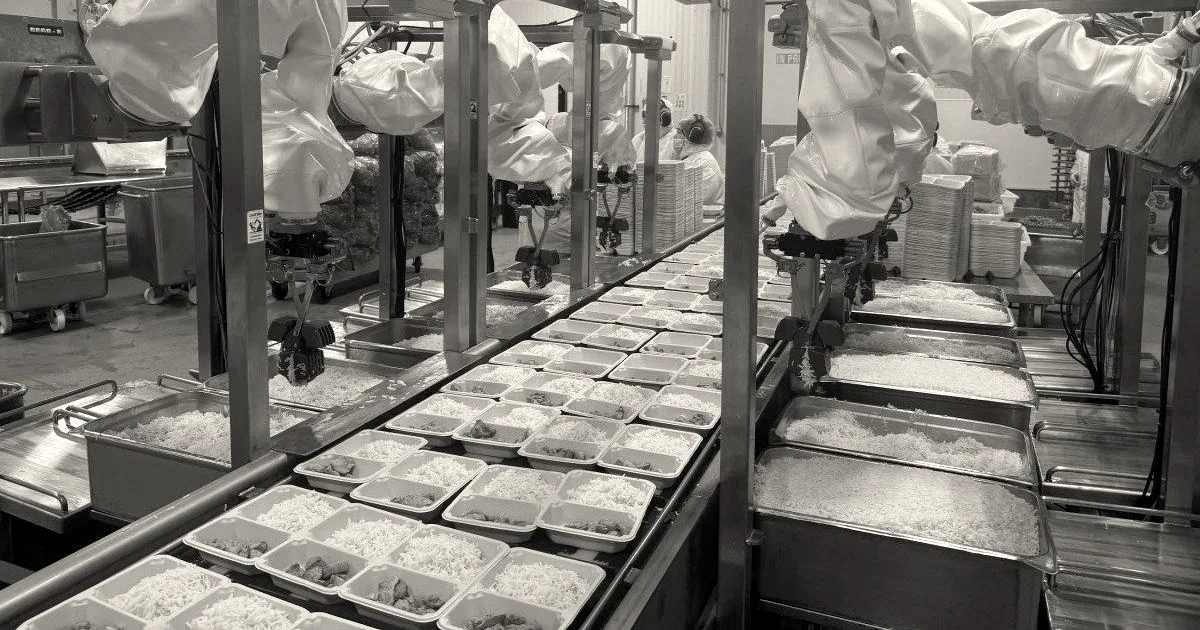
Chef Robotics has reached a milestone of 100 million servings. This milestone follows a strategic pivot from the fast-casual restaurant sector—a restaurant category between fast food and casual dining—to food manufacturing. Originally, the startup sought to deploy its technology in fast-casual restaurants across America’s cities, but it pivoted early to focus on large-scale food production. Today, the company serves enterprise customers including Amy’s Kitchen and Chef Bombay, alongside one of the largest school lunch providers in the country. A company spokesperson defined a serving as a portion of food deposited by its robots into a meal tray, representing a single component of a full meal.
This milestone stands in contrast to the robot cooking graveyard of failed food automation startups. The sector has historically struggled with high costs and operational complexity. Notable failures include Chowbotics, a salad-making startup that was acquired and subsequently shut down by DoorDash, and Zume, which collapsed in 2023 after a $400 million attempt to disrupt pizza delivery. Chef Robotics has managed to survive this graveyard by shifting its focus away from consumer-facing dining venues to institutional-scale food manufacturing.
The company is now using data generated from its 100 million servings to improve its AI models for food handling and packaging. Rajat Bhageria, the CEO of Chef Robotics, explained that the “inherent nature of food”—which is malleable and lacks predictable proportions—makes automated handling exceptionally difficult. By feeding operational data back into its models, the company aims to make its robots progressively better at handling food, which it hopes will help the business scale.
Looking ahead, Chef Robotics plans to expand its technology into smaller kitchens. According to Bhageria, the company recently signed one of the largest airline catering companies in the world as a customer. The startup also plans to expand into ghost kitchens—which are food preparation operations that run without a physical restaurant storefront—to supply meals for platforms like DoorDash. Over the longer term, Bhageria noted that the company would like to expand further into fast-casual restaurants, stadiums, and prisons.
Why it matters
Chef Robotics’ successful pivot from consumer-facing fast casual to B2B food manufacturing demonstrates a viable path for automation startups to escape the high failure rates of the sector.