AI & Models
OpenAI adds dynamic visual explanations to ChatGPT
OpenAI has launched dynamic visual explanations in ChatGPT, allowing users to interact with over 70 math and science topics in real time.
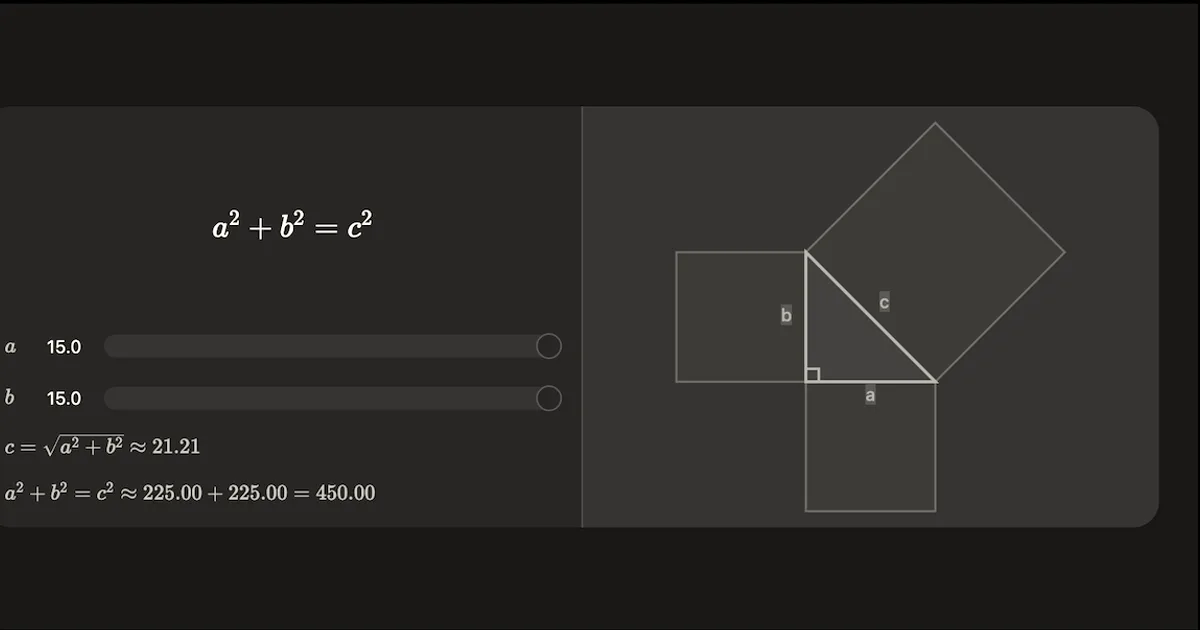
On Tuesday, OpenAI introduced dynamic visual explanations, a new ChatGPT feature that allows users to see how formulas, variables, and mathematical relationships change in real time. Instead of reading static text or viewing fixed diagrams, users can directly manipulate these interactive visuals. For example, when exploring mathematical or scientific concepts, users can adjust numbers and variables to see the changes reflected immediately. To use the feature, users can ask ChatGPT questions such as “What is a lens equation?” or “How can I find the area of a circle?” The platform then responds with both a written explanation and an interactive module that can be manipulated.
These dynamic visuals are currently available for over 70 math and science topics. This includes subjects such as the binomial square, Charles’ law, the area of a circle, compound interest, Coulomb’s law, the difference of squares, exponential decay, Hooke’s law, kinetic energy, linear equations, and Ohm’s law. OpenAI plans to expand the feature in the future to include more interactive topics. The tool is currently available to all logged-in ChatGPT users.
According to OpenAI, more than 140 million people use ChatGPT each week for help with math and science, which are subjects that have traditionally challenged learners. The launch of dynamic visual explanations joins other educational tools recently introduced to ChatGPT. These include study mode, which guides users through problems step by step, and QuizGPT, a tool where users can generate flashcards and ask ChatGPT to quiz them on any topic before exams.
Other artificial-intelligence companies are also exploring similar interactive features. In November, Google launched its own interactive diagrams and visuals within Gemini, its AI model.
The introduction of dynamic visual explanations marks a shift in how users interact with the AI platform. Rather than simply delivering static answers to queries, the tool now prompts users to engage directly with the underlying concepts. Whether this interactive approach translates to a deeper understanding of the material will likely depend on how students and teachers integrate the tool into their learning routines.
Why it matters
The launch of dynamic visual explanations shifts ChatGPT’s role from simply delivering answers to requiring users to engage directly with underlying concepts. This transition could alter how educational AI tools are integrated into classrooms and self-directed study.