Chips & Hardware
Canopii bets on grants over VC for robotic farming
Canopii is developing autonomous robotic greenhouses, having raised approximately $3.6 million in funding, as it attempts to succeed where other vertical farming companies have struggled.
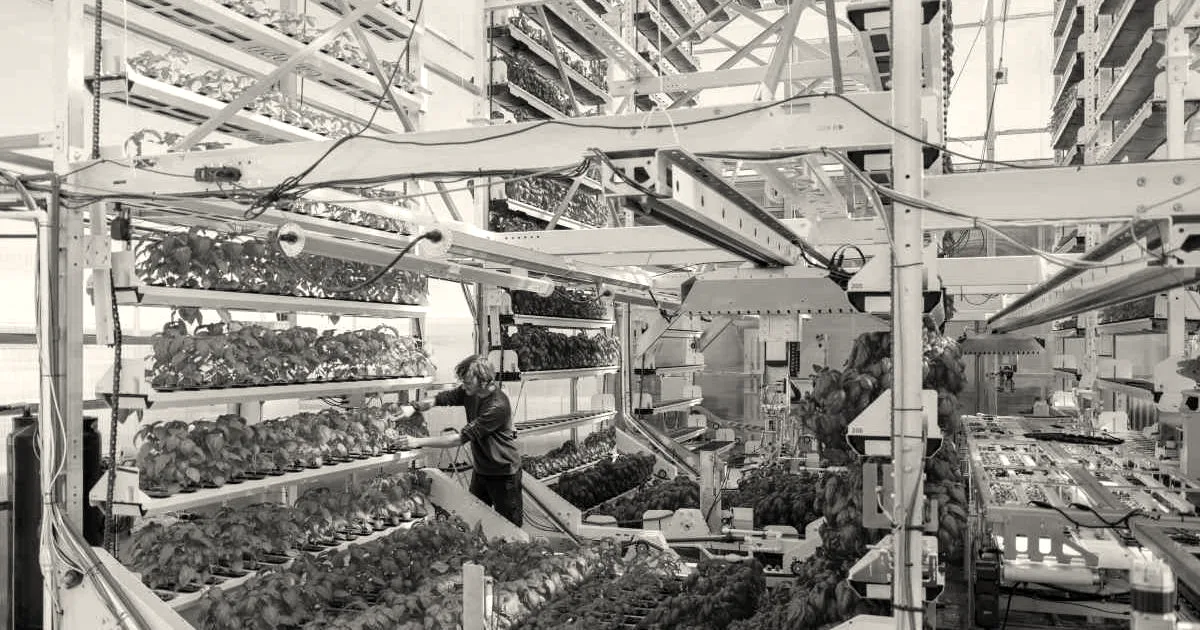
Portland, Oregon-based agtech (agricultural technology) startup Canopii is building robotic greenhouses designed to automate the entire crop-growing process. The company’s systems can autonomously run agricultural production from seeding to harvest without human intervention. To fund this development, Canopii has raised approximately $3.6 million thus far. Rather than relying on traditional venture capital, the company secured $2.3 million of its funding from grants. After three years of planning, founder David Ashton applied for a $250,000 grant with the National Science Foundation, a US government agency, to build an initial prototype. Following that success, the company secured a $1 million grant to construct a full-scale prototype. Ashton started developing the company’s plans after the Portland-based agtech company he was set to work at filed for bankruptcy, drawing inspiration from the agricultural landscape he observed while driving the 300-mile stretch between Sacramento, California, and San Luis Obispo during a drought in the late 2000s.
This funding strategy represents a deliberate departure from the broader indoor farming industry. Over the past several years, vertical farms—an indoor farming method using stacked layers—attracted venture capital, only for competitors like Bowery Farming and Plenty to file for bankruptcy. Ashton argues that the capital stack, which refers to the mix of debt and equity used to finance a company, must be diversified beyond venture capital to survive the high costs of building physical food infrastructure. By moving slowly and iterating on a single farm over five years, the startup aims to avoid the rapid-scaling traps that led to the collapse of its peers.
The greenhouses, manufactured by GK Designs, are designed to optimize resource consumption while maintaining high yields. The technical specifications of the system include:
- Annual output: Up to 40,000 pounds of produce per year, currently focused on herbs and specialty greens.
- Water usage: Requires only one spigot of water.
- Power requirements: Runs entirely off of 100 AMPs and 240 volts, which Ashton notes is equivalent to standard household power.
“We can mass produce it like a car,” Ashton said, highlighting the system’s standardized design. While the company is currently preparing to build its first commercial farm in downtown Portland, Canopii plans to franchise these farms in the future across the country.
Why it matters
Canopii’s strategy of avoiding venture capital in favor of grants and slow, iterative growth offers a potential blueprint for survival in the volatile indoor farming sector, contrasting sharply with the high-burn failures of well-funded competitors.