Chips & Hardware
Boston Dynamics integrates Google DeepMind AI into Atlas humanoid
Boston Dynamics is partnering with Google DeepMind to integrate AI foundation models into its Atlas humanoid robot, aiming to improve natural human-robot interaction for industrial use.
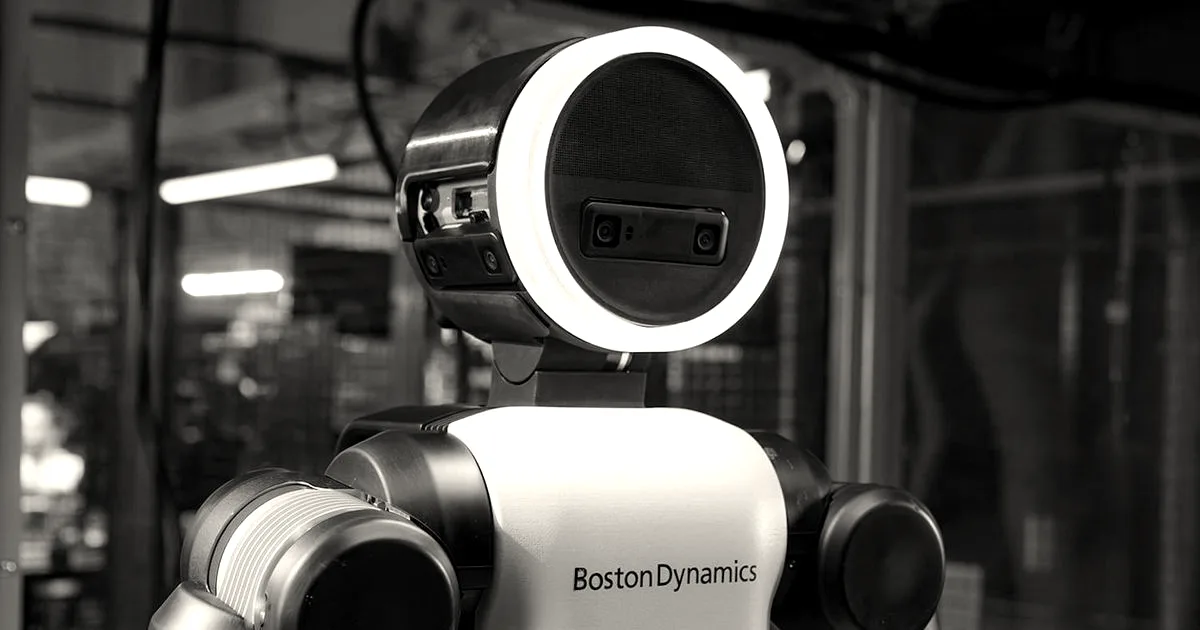
On Monday, robotics company Boston Dynamics announced a partnership with Google DeepMind to integrate AI foundation models into its Atlas humanoid robot. The collaboration, announced at CES 2026, aims to develop what the partners describe as the world’s most advanced robot foundation model. Carolina Parada, senior director of robotics at Google DeepMind, stated that the initiative is designed to help fulfill the promise of general-purpose human needs by training robots to perceive and reason more like humans.
The Atlas robot is built for physical labor, featuring:
- 56 degrees of freedom—the independent joints that allow a robot to move
- A lifting capacity of up to 110 pounds
- Human-scale hands equipped with tactile sensing
However, commercializing the robot requires more than physical capability. Alberto Rodriguez, director of Atlas behavior at Boston Dynamics, noted that turning the humanoid into a product requires the machine to interact with people naturally rather than relying solely on athletic performance. To achieve this, the partnership will leverage Google DeepMind’s AI models to help the robot learn from experience. As Parada explained, “Rather than having a set of predefined, loaded tasks onto the robot, we think robots should understand the physical world the same way we do” so they can generalize to new situations and improve over time.
Hyundai Motor Group, the majority owner of Boston Dynamics, plans to eventually deploy Atlas robots for tasks like parts sequencing—the process of organizing automotive components for assembly—by 2028. The deployment is slated for a Hyundai factory in Savannah, Georgia. To support this transition, Hyundai is opening a US facility this year called the Robot Metaplant Application Center (RMAC) to teach robots how to map physical movements.
This industrial push builds on Boston Dynamics’ existing commercial footprint. The company’s quadruped robot, Spot, is currently available in more than 40 countries, while its warehouse robot, Stretch, has unloaded more than 20 million boxes globally since its launch in 2023. However, introducing autonomous humanoids into shared workspaces carries distinct challenges, and developers acknowledge that that kind of natural interaction with humans has real safety implications.
Why it matters
The partnership aims to integrate Google DeepMind’s AI foundation models into Boston Dynamics’ Atlas robot to enable more natural human-robot interaction and accelerate development for real-world scaling in industrial settings like Hyundai factories.