Compute & Cloud
Arbor Energy lands billion-dollar deal for rocket-based turbines
Arbor Energy has secured a deal to supply up to 5 gigawatts of modular, rocket-based turbines to GridMarket, potentially worth single-digit billions of dollars.
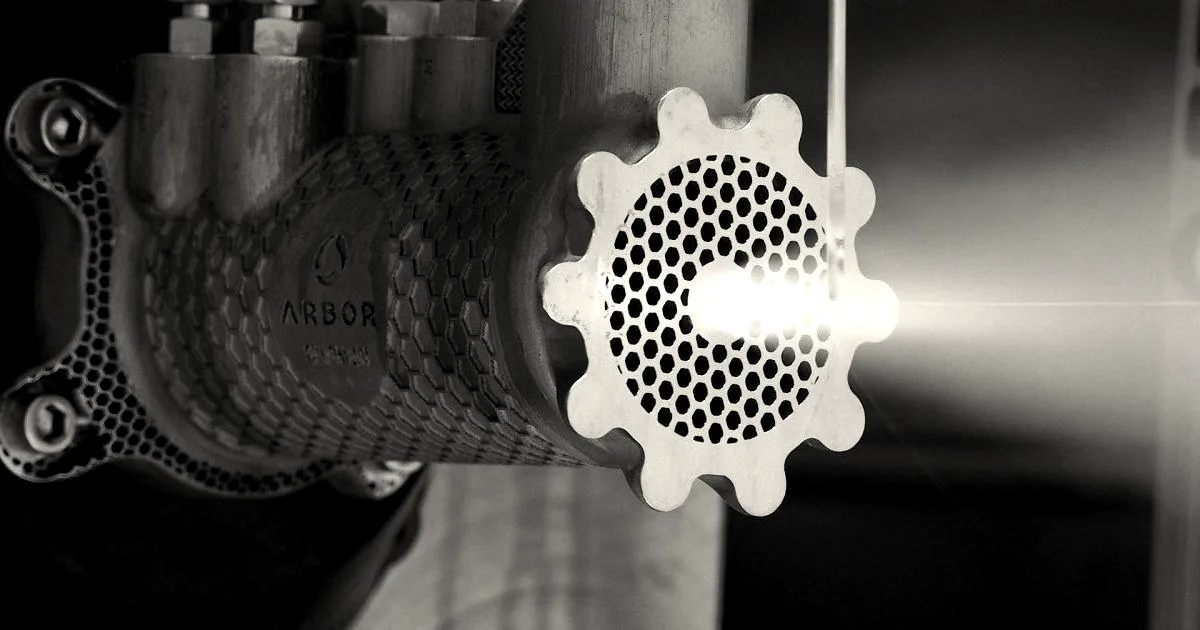
On Wednesday, energy startup Arbor Energy announced a partnership to sell up to 5 gigawatts of its modular turbines to GridMarket, a company that helps arrange power projects for data centers and industrial users. The order represents 200 units if fully fulfilled, with each turbine capable of generating 25 megawatts. While neither company disclosed the exact price of the deal, a person familiar with the deal reported that the total value is in the single-digit billions of dollars. The startup has reportedly seen a willingness to pay upwards of $100 per megawatt-hour.
Arbor’s Halcyon turbines utilize rocket turbomachinery—high-performance engine technology originally developed for spaceflight—and its first commercial units will be 3D printed. Initially designed to run on biomass by converting organic material into syngas (a combustible gas mixture), Arbor modified the Halcyon turbines to also accept natural gas. This modification makes the turbine more omnivorous, though running on fossil fuels means the process is not carbon negative due to potential supply chain methane leaks. However, Arbor plans to sequester the emerging carbon dioxide. Hartwig stated that the company sees a long-term path to less than 10 grams of CO2 per kilowatt-hour, which is significantly lower than typical natural gas plants that emit about 400 grams of CO2 per kilowatt hour.
The startup plans to connect its first turbine to the grid in 2028. It then hopes to ramp production through 2030, aiming to deliver more than 100 turbines annually, with a long-term goal of producing 10 gigawatts of new capacity every year. This timeline targets a severe bottleneck in the power sector. Traditional gas turbine supply chains are highly inelastic, constrained by the specialized production of blades and vanes. Consequently, customers ordering a traditional turbine today face wait times extending to 2032. Arbor is betting that its 3D-printed and machined parts will allow it to bypass these supply chain constraints to meet urgent demand. As Brad Hartwig, co-founder and CEO of Arbor, noted, “The time frames are compressing and the scale is getting larger.”
Why it matters
Arbor Energy’s deal highlights how data center power demand is forcing industrial users to look beyond traditional, bottlenecked turbine supply chains toward novel, high-performance engine technologies.