Apps & Consumer
Airbnb expands 'Reserve Now, Pay Later' feature globally
Airbnb is rolling out its 'Reserve Now, Pay Later' feature globally after seeing 70% adoption in the U.S. and a positive impact on booking volume.
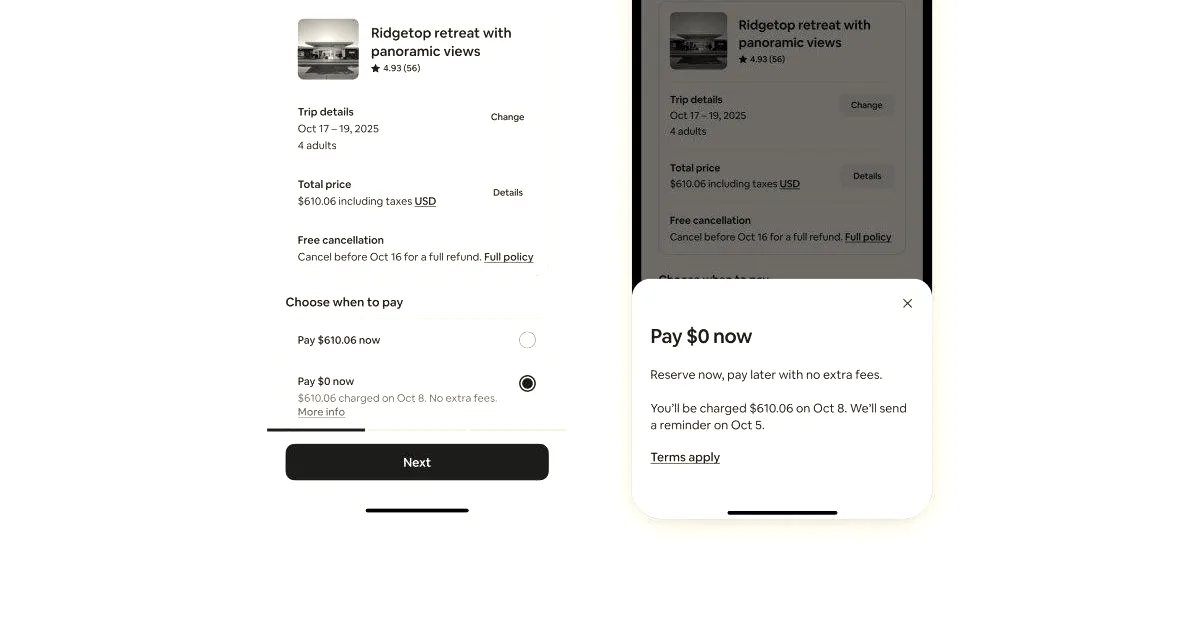
Airbnb announced on Tuesday that it is launching its “Reserve Now, Pay Later” feature globally. The feature, which mirrors “buy now, pay later” (BNPL) payment plans popular in e-commerce, allows users to secure bookings without immediate payment. Under this system, properties with a “flexible” or “moderate” cancellation policy are eligible for the upfront reservation, with users charged closer to their check-in date rather than at the time of booking.
The company noted that since its initial launch, the feature saw 70% adoption for eligible bookings in the U.S. During its earnings call for Q4 2025, Airbnb stated that the feature helped grow nights booked in the quarter. Ellie Mertz, CFO of Airbnb, noted that the feature “saw significant adoption among eligible guests in Q4. It’s also led to longer booking lead times and a mix shift towards larger entire homes, especially those with four or more bedrooms, contributing to the increase in average daily rate.” In this context, average daily rate refers to the average rental revenue earned for an occupied room per day.
However, the flexible payment option also influenced cancellation trends. Mertz noted that Airbnb’s overall cancellation rate increased from 16% to 17% for the quarter, with higher rates among customers using the upfront booking product. Still, she characterized the increase as “not hugely material relative to the broader cancellations on the platform.”
This global rollout builds on years of payment experimentation by the company. In 2018, Airbnb launched an earlier pay-later product that allowed users to book properties by paying either 20% or 50% of the total charges up front, with the rest due later. In 2023, the company partnered with fintech firm Klarna to let users pay for stays in four installments over six weeks. The expansion is also supported by consumer demand data. Last year, Airbnb and Focaldata, a London-based market research and polling company, surveyed U.S. travelers. In that survey, 60% of participants said a flexible payment option is important when booking a holiday, and 55% said they would use such an option.
Why it matters
Airbnb’s expansion of flexible payment options signals a broader strategy to capture demand for larger, longer-lead-time bookings, effectively using fintech to drive platform growth.