Apps & Consumer
RevenueCat: AI apps struggle with long-term retention
RevenueCat’s 2026 report finds that while AI-powered apps convert users better, they suffer from higher churn and lower long-term retention across iOS, Android, and web.
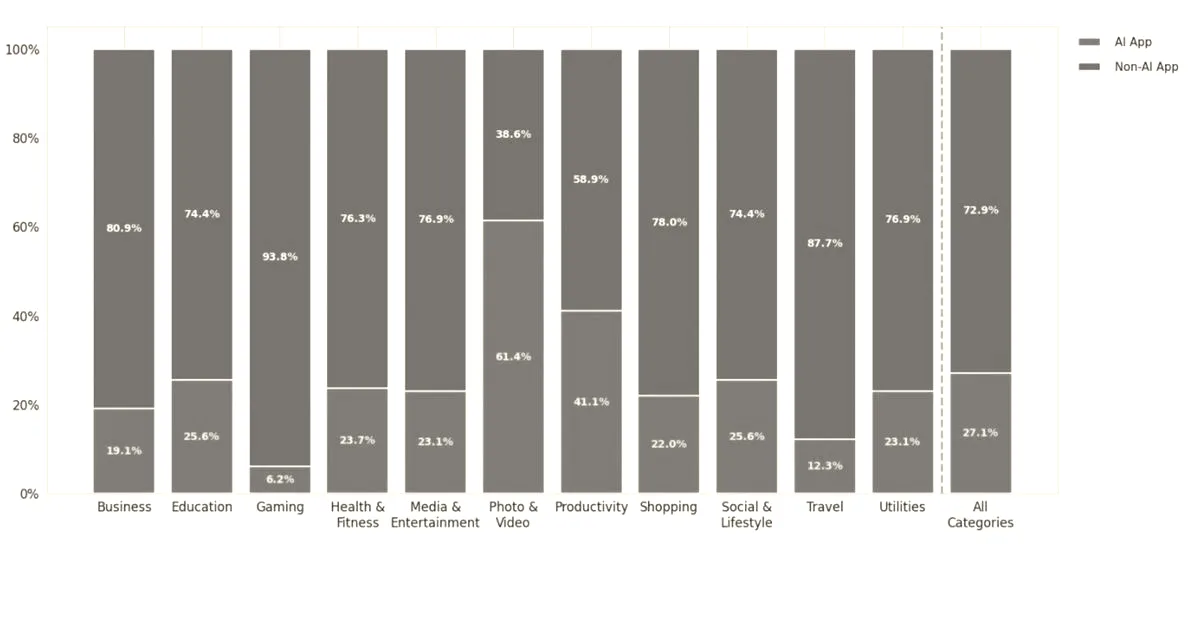
Integrating artificial intelligence into mobile and web applications does not guarantee long-term customer loyalty. According to the 2026 State of Subscription Apps Report by RevenueCat—a subscription management platform used by 75,000 app developers to manage 1 billion in-app transactions worth $11 billion in annual revenue—AI-powered apps face a retention paradox. While these apps excel at converting initial interest into paid subscriptions, they struggle to keep those users over time. Across iOS, Android, and web platforms, AI-powered apps (which represent 27.1% of apps analyzed, compared to 72.9% for non-AI apps) see subscribers cancel their annual subscriptions—a metric known as churn—30% faster than non-AI apps at the median.
This retention deficit is visible across multiple timeframes, with weekly subscriptions being the sole exception. Furthermore, AI-powered apps experience higher refund rates, indicating potential volatility in user satisfaction and long-term value.
A comparison of key performance metrics between AI and non-AI apps reveals these dynamics:
- Annual retention: 21.1% for AI apps, compared to 30.7% for non-AI apps.
- Monthly retention: 6.1% for AI apps, compared to 9.5% for non-AI apps.
- Weekly retention: 2.5% for AI apps, compared to 1.7% for non-AI apps.
- Trial-to-paid conversion: 8.5% for AI apps, compared to 5.6% for non-AI apps, both at the median, representing a 52% better conversion rate for AI apps.
- Monetization rate: 2.4% for AI apps, compared to 2% for non-AI apps, both at the median, representing a 20% better monetization rate for AI apps.
- Refund rates: 4.2% for AI apps, compared to 3.5% for non-AI apps, both at the median, making AI app refund rates 20% higher. The upper bound of refund rates is also higher for AI apps at 15.6%, compared to 12.5% for non-AI apps.
Despite these retention challenges, AI-powered apps currently generate higher monthly and annual realized lifetime value (RLTV)—a metric that measures the actual net value of an average paying user over time—for developers. AI apps generate a 39% or higher monthly RLTV, with a median of $18.92 per month compared to $13.59 for non-AI apps. On an annual basis, AI apps sustain a 41% or higher RLTV, yielding $30.16 compared to $21.37 for non-AI apps, both at the median.
Why it matters
The report highlights a critical trade-off for developers: AI integration can boost immediate revenue and trial conversions, but it creates a “leaky bucket” problem where users churn significantly faster than in non-AI apps.